
Deep Drilled Pier Foundations in Pueblo
Drilled pier foundations for heavy industrial, institutional and commercial buildings around Pueblo, with logged shafts, inspected bearing and clear pricing.
- Category
- General Contracting Services
- Area
- Pueblo and southern Colorado
- Next Step
- Request a Project Review
Rolling a rail 480 feet long takes a building that holds still. The Pueblo mill can now do it, up from an earlier limit of 80 feet, and long lines of equipment, tall columns and crane runways are the kind of load that makes a plain spread footing an uneasy choice. When soils near the surface cannot carry a load, or settle unevenly under it, the answer is often to go deeper, and that is where drilled piers come in.
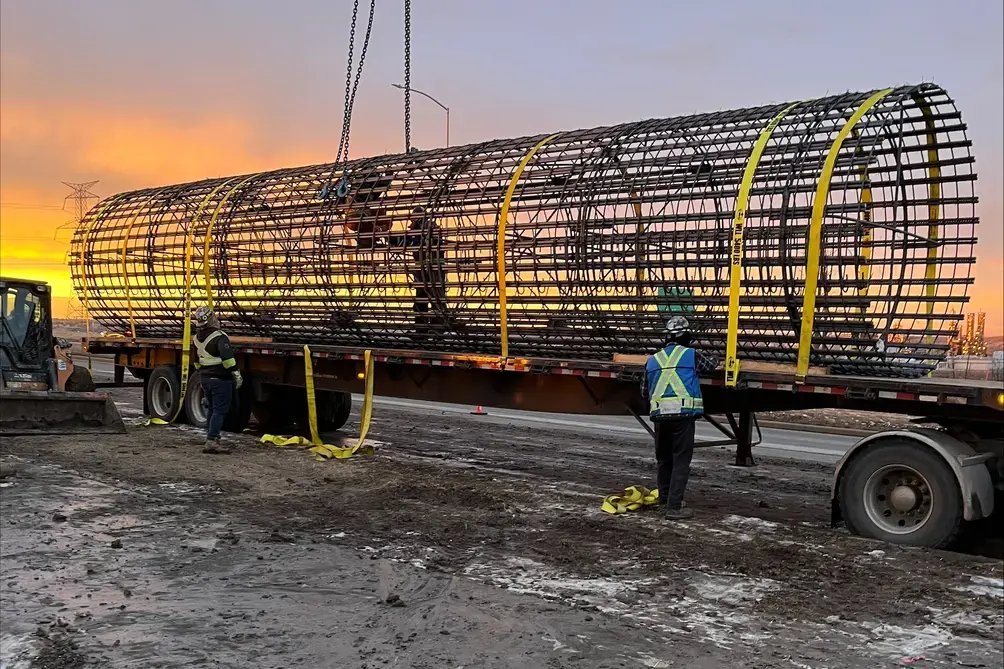
A deep drilled pier is a concrete shaft poured into a hole we bore to bearing depth, with a rebar cage set in the center. It carries column loads, resists uplift and lateral force, and stays quiet to build compared with driven piles. We drill, set the cage, place the concrete and cap the pier with a grade beam or a pile cap that ties it into the rest of the foundation system. Each shaft is logged and inspected.
Whether you need piers at all comes from the geotechnical engineer, not from us. What we add is a plain view of cost and schedule, and a crew that can tell the difference between a hole that is ready to pour and one that is not. Piers are usually part of a wider foundation package, and we price them that way so the pieces fit.
How a pier gets drilled and poured
The first step is a drilling plan based on the boring logs. We mark each pier location with survey control, set up the rig and bore to the design depth, checking diameter and plumbness as we go. If the hole stays open, we pour. If groundwater or loose material threatens to collapse it, we use casing or slurry as the engineer specifies, and we have the right equipment on site before we start rather than after a hole fails.
Once the shaft is clean, the inspector verifies depth and bearing. We lower the reinforcing cage with spacers so cover is maintained, then place concrete with a tremie or chute so it does not segregate. We pour the same day we drill whenever possible, because an open hole is a risk. Afterward, we cut off the top to the plan elevation and tie in the next piece of the foundation, which may be a grade beam or a column pedestal.
Decisions that shape a pier job
Pier diameter, depth and count come from the loads and the soil. Before design is final, ask what the alternatives are: wider footings, over-excavation and engineered fill, or piers. Each one carries a different cost and risk. A tilt-wall building with line loads along the panels, or an aircraft hangar with long clear spans and heavy door frames, can swing either way depending on the borings.
Access matters too. A drill rig is a heavy machine that needs a stable, level working pad, and a rainy spell can turn a bare site into a bog. We build the rig pad and haul road as part of the work, plan where the spoil goes and keep it from becoming a drainage problem. We also look at nearby structures and utilities, since vibration and ground movement need to stay inside what the neighbors can tolerate.
Heavy loads in an industrial metro
Pueblo's steel mill is the obvious example of heavy industry, but it is not the only source of load. At PuebloPlex, the 150,000 square foot defense complex under construction for solid rocket motors and propulsion points to a campus of specialized buildings and process equipment, the kind of work manufacturers bring to a site. A project like that rewards owners who ask the foundation questions early.
On the south side near the old Minnequa steel works, a builder also has to look hard at what is already in the ground. Old foundations, slabs and utilities from earlier decades can sit exactly where a new pier wants to go. We locate and clear them or move the pier layout, and we do not trust a drawing to tell us what is actually down there. A probe or a test hole costs less than a rig stuck on a buried obstruction.
Working around a rig
Drilling brings its own hazards: rotating tools, open shafts, heavy cages and a concrete truck backing in next to a hole. We fence open shafts and cover them whenever the rig is not working over them, keep people out of the swing radius and require spotters when trucks move near the work. Overhead lines get marked and distance maintained, and underground utilities are located before the rig sets up.
Spoil from the bore can contain whatever was in the soil, so we test it when site history calls for it and handle it according to the results. Dust, mud and noise are controlled on sites near occupied buildings. On PuebloPlex parcels with a long operational history, we review what is known about the ground before the first hole is bored, and we adjust the plan when the record is thin.
What a pier costs and why
Pier price moves with diameter, depth, rebar weight, concrete volume and the presence of casing or water. Mobilizing a rig is a fixed cost that spreads better over many piers than a few, so a small job can look expensive per shaft. Rock or cemented layers slow a rig down and may call for specialized tooling, which adds to the number.
Testing and inspection add cost, and they are worth it. Load testing, integrity testing or extra inspection on a critical shaft costs far less than a remediation after the building is up. We show these as separate items with an allowance for conditions that differ from the borings. If you are comparing a pier bid to a spread footing bid, we will help you compare the whole system, including excavation, backfill, schedule and risk, not just the line item.
Fitting piers into the schedule
Piers sit early on the critical path. They follow mass grading and precede grade beams, columns and slab work, so a delay at the rig delays everything else. We schedule the drill rig and cage fabrication in advance, line up concrete supply for same-day pours and coordinate inspections so the holes do not sit open. A good day for a rig crew is a day when they drill, inspect, pour and leave a clean location behind.
When equipment lead times are long, as on a heavy long-lead procurement job, the pier layout often has to wait for vendor loads. We drill the structural piers first and leave equipment locations for last, or install them to the vendor's preliminary loads with the engineer's approval. That keeps the building moving while the paperwork catches up.
Have the borings reviewed with us
Send the geotechnical report and structural loads and we will tell you what the pier package looks like in cost and time, and whether another system makes more sense.
Questions Owners Ask
How do I know if my building needs deep piers?
The geotechnical report will say. Engineers recommend piers when shallow soils cannot carry the load, settle too much or move with moisture. If your report is not final, ask the engineer to price the options so you can compare piers against wider footings or engineered fill before design is locked.
How long does it take to drill and pour a pier?
Straightforward shafts can be drilled, inspected and poured in a day. Deeper holes, casing, groundwater or obstructions stretch that out. We give a rig duration based on the borings and add float for the conditions we cannot see until we are in the ground.
What happens if we hit rock or an old foundation?
We stop, document it and tell the engineer. Depending on what we find, the options are to switch tooling, to core through, or to move the pier. We carry a unit price for hard drilling in the proposal, so the cost of that decision is known in advance.
Who inspects the piers?
A special inspector working for the owner or engineer verifies depth, diameter, bearing and cage placement for each shaft. We schedule the inspector, keep a drilling log for every pier and include the records in the closeout binder.