
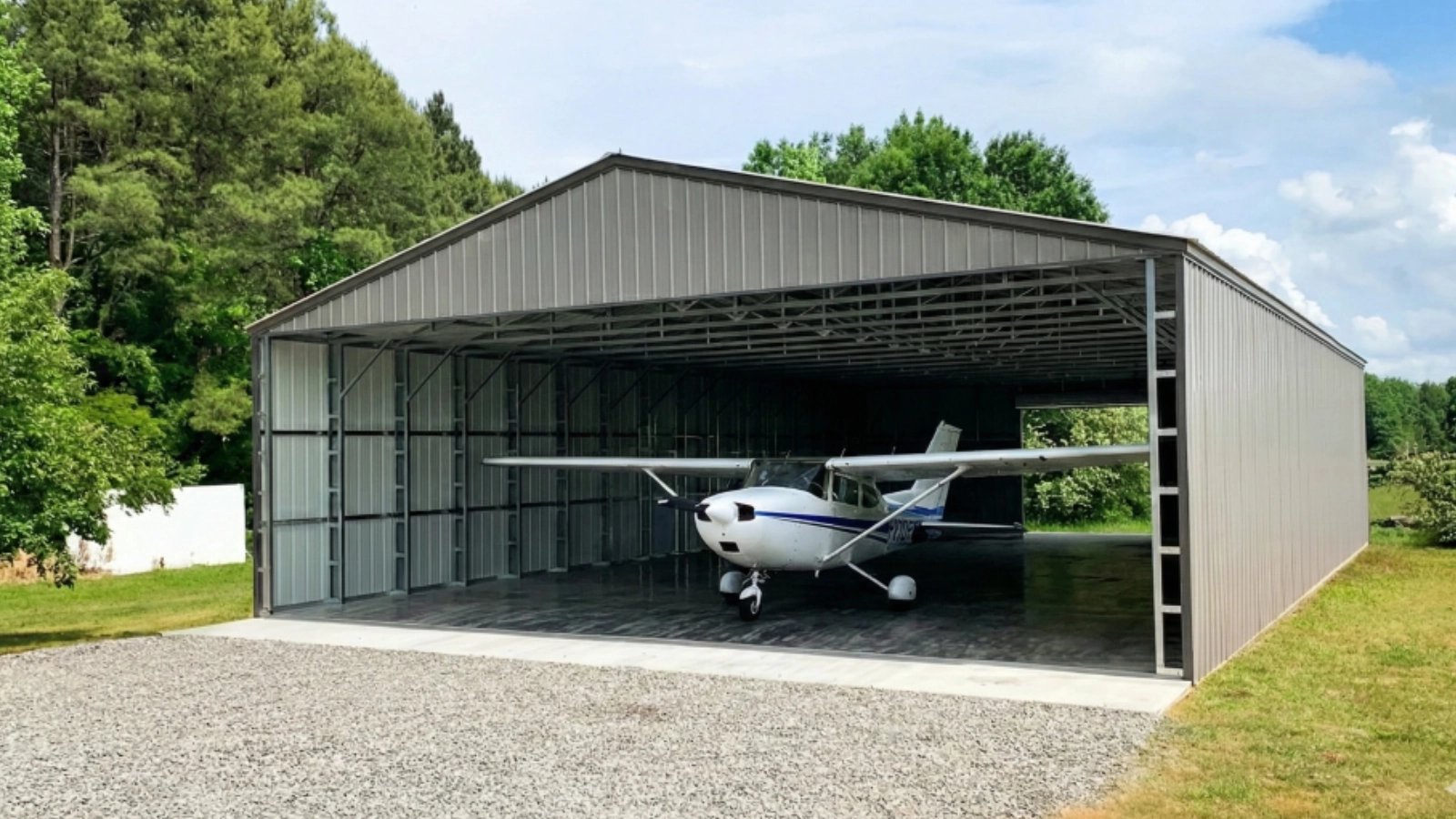
Aircraft Hangar Construction in Pueblo
Aircraft hangar construction at Pueblo Memorial Airport and Arkansas Valley fields: clear-span frames, hangar doors, fire protection and airport approvals.
- Category
- Building Types
- Area
- Pueblo and southern Colorado
- Next Step
- Request a Project Review
A 10,498 foot runway is a lot of airfield for a city this size, and it is the reason hangar work in Pueblo is not limited to small private buildings. Pueblo Memorial Airport covers 3,872 acres six miles east of town, and it also has an 8,310 foot crosswind runway and a third at 4,690 feet. Doss Aviation conducts U.S. Air Force flight training there for 1,300 to 1,700 trainees a year, which means aircraft, instructors and maintenance work on the field every day.
A hangar is simple in concept and demanding in detail. It is a very large door in front of a very large room with nothing in the way. The door is heavy and has to work every time, the roof spans over the aircraft, the slab carries wheel loads, and fire protection must handle fuel and a high ceiling. Small errors show up quickly.
We build individual T-hangars, box hangars, maintenance hangars and mixed-use aviation buildings. The airport industrial park, the city's 40 acres with direct taxiway access, and general aviation fields farther east offer different sites, and each has its own rules to follow.
Where hangar work happens
Pueblo Memorial Airport is adjacent to US 50 and 5 miles from I-25, and State Highway 47 ends at the US 50 and SH 96 interchange that serves it, with Pete Jimenez Parkway branching east toward the field. The Pueblo Chemical Agent-Destruction Pilot Plant training facility is located at the airport industrial park, which shows that the area handles specialized buildings as well as aviation.
East along the valley, La Junta has a former military airport five miles north of town. Fields like that attract maintenance and storage use because of their long runways and low land cost. Owners can read about the airport industrial park and how our public sector clients use airfields.
What a hangar package includes
The core package is the structure, the hangar door, the slab, the roof and envelope, fire protection, lighting, power and a small office or shop. Larger hangars add heating, mezzanines, tool rooms, paint or wash bays and parts storage. Aprons and taxi connections are separate paving projects that must meet airport standards.
The structure is usually a clear-span steel frame, which our metal building team can supply, or heavier custom steel for larger spans. The door can be a bi-fold, hydraulic, sliding or fabric type, and it drives the structural design. We specify the door early because its frame, tracks, weight and opening size shape the whole front of the building.
Airport rules and building codes
An airfield adds a layer of review. Height and location relative to runways and taxiways are checked by the airport owner and, for obstruction purposes, by federal aviation authorities, and the airport's own lease and design standards apply on its land. Setbacks from taxiways and aprons set where the building can sit. We start those conversations before design is far along.
The building code review follows the jurisdiction. The Pueblo Regional Building Department lists the 2021 IBC, IFC and IECC as in effect, with the 2023 NEC. Aircraft hangars have their own occupancy and fire protection rules under those codes, including foam or sprinkler options and limits on fuel storage. The city says commercial approvals currently take about 75 days.
Fuel, fire and working near aircraft
Fire protection is the main code item in a hangar. A large open volume with aircraft and fuel needs a design that suppresses a fire quickly, and the system is expensive. Foam systems, high-expansion systems and heavy sprinkler designs are all possible, depending on aircraft size and use. We bring in the fire protection engineer early and the fire official next.
On an active airfield we also work to rules about vehicles, cranes and materials. Equipment height is limited, workers need training for ramp access, and foreign object debris must be controlled. The construction trade partners follow the airport's site access plan and keep tools and materials out of movement areas.
Schedule and the airport calendar
The hangar door and steel package are the long lead items. We order them as soon as the design is approved, and pour the foundation and slab while they are in production. The slab matters because it takes aircraft wheel loads, tug traffic and sometimes heavy jacks, and it should be level enough for doors to run.
An existing airport adds approvals: lease terms, airport board review and sometimes grant requirements. Those steps can take longer than the construction itself. Our pre-engineered metal building approach can shorten the structural timeline, but airport reviews should start at the same time as design.
How we work with aviation owners
We start by asking about the aircraft: wingspan, tail height, weight and the number to be stored. Those dimensions set the door and the frame. Then we ask about use. A storage hangar can be simple, while a maintenance hangar needs shop air, lifting provisions, drains and ventilation. A flight school hangar may need classrooms and offices.
We review the lease terms and airport standards with the owner, and we give a budget that separates the building, the apron and site, and the fire system. Some airport sites have limited utilities, so we check what is available. Related guidance is in our work with manufacturing and aerospace users, since PuebloPlex lists aerospace and defense among its target uses.
Size your hangar with us
Give us the aircraft, the field and your lease status. We will describe the building, the door, the fire system and the approvals ahead. Our flex industrial buildings can also serve aviation tenants who need shop space.
Questions Owners Ask
How wide should a hangar door be?
The door should clear the widest aircraft you plan to store with room to spare, and it should account for the tail height. Add margin for towing and wind. We take the aircraft dimensions at the start and design the door and the frame together, since a door change late in design is costly.
Can you build on airport property?
Yes, with the airport owner's approval. The airport lease, design standards, height review and utility availability all affect the project. We help the owner assemble the submittals and sequence the reviews alongside the design.
What does hangar fire protection involve?
A fire suppression system sized for the aircraft, fuel and building height, plus detection, alarms and access for firefighters. Foam and high-expansion systems may be used on larger hangars. The fire official reviews the design, so we involve them early to avoid redesign.
Is a pre-engineered building good for a hangar?
Often yes. Clear-span metal frames are common for hangars and cost less than custom steel in many cases. Very large spans or special loads may call for custom steel. We price the options once we know the aircraft and door type.
How long does hangar construction take?
A modest hangar can be built in several months after approvals, while large maintenance hangars take longer. The door, steel and fire system are the longest lead items, and airport approvals may add time. We lay out the dates and call out the approvals that can slow the job.