
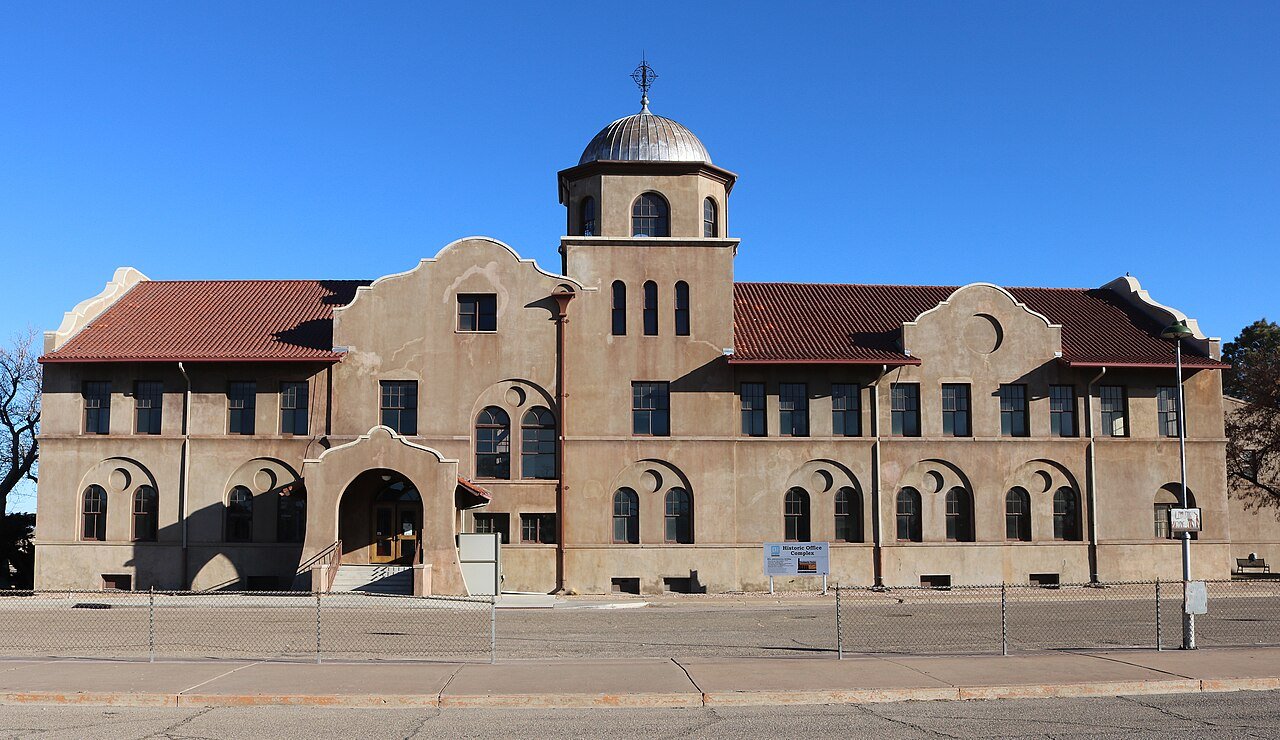
Industrial Building in the Minnequa Steel Mill Area
Industrial and support buildings near Pueblo's south side steel mill: heavy slabs, crane buildings, strict safety rules and straight pricing for mill suppliers.
- Category
- Service Areas
- Area
- Pueblo and southern Colorado
- Next Step
- Request a Project Review
Working beside a live steel mill changes how a job is planned, and the people who hire us on the south side usually know it. The mill on Pueblo's south side along the Arkansas River began producing on April 12, 1881, was renamed the Minnequa Works in 1901 and became Rocky Mountain Steel Mills in 1993. EVRAZ took ownership in January 2007 for $2.3 billion. The electric-furnace steel, rail, rod, bar and seamless tube mills remain in operation, and EVRAZ Rocky Mountain Steel is listed with 931 employees as Pueblo's eighth largest employer in the city's 2023 annual financial report.
For a builder, that history means three things. The ground around the mill carries well over a century of industrial use. Heavy equipment and loaded trucks are normal neighbors. And the businesses that supply and service the mill need buildings that can handle weight, heat and truck traffic. We build fabrication shops, equipment buildings, storage and offices for those owners, and we plan the work around their operations.
Projects here, whether a parts warehouse or a small office, benefit from a contractor that knows the haul routes and the railroad crossings. The same industrial thinking applies out along Pueblo Boulevard, where south side businesses often expand, and at the wind tower plant area, where heavy fabrication has its own handling needs.
Rules inside and next to the fence
A job next to an operating mill starts with the owner's safety program. Contractor orientation, personal protective equipment, hot work permits, lockout and tagout and restricted areas all come before the first hour of work. We attend the orientation, sign on to the program and brief the construction trade partners in person.
Outside the fence, we manage truck traffic, rail crossings and crane lifts so that we do not interfere with mill shipments. Long loads move through this area. The Pueblo rail mill can roll rails up to 480 feet long, up from an earlier 80 foot limit, and shipping and handling that length takes space and planning. If our work shares a street or a rail crossing with that traffic, we agree on schedules ahead of time.
Buildings that support heavy industry
Typical work includes fabrication and machine shops, maintenance buildings, tool and parts warehouses, laydown yards with heavy paving and offices attached to industrial buildings. These use thick slabs, heavy foundations and wide column spacing to leave room for equipment and overhead cranes.
Our manufacturing facility construction work starts with what the owner makes and moves: weights, rolling loads, heat, dust and vibration. We design floors, foundations and utilities around those, then fit the building envelope around them. A manufacturing plant that is built around the process, and not the other way around, usually costs less to operate.
Concrete and steel under close management
We schedule and supervise heavy concrete, including equipment pads, trench work and thick industrial slabs. Steel is erected by a specialty crew sized to the job, and our structural steel erection process includes a pick plan, a rigging plan and a clear exclusion zone for the lift.
For buildings with overhead cranes, the runway beams, columns and foundations must be tight to tolerance. We coordinate with the crane supplier on loads, rail alignment and clearances early, as described for crane buildings. A runway that is a half inch off will cost far more than that to fix later, so we survey the rail line again after the beams are set and before the crane is commissioned.
Who we serve near the mill
The steel and rail business sits at the top of the supply chain, but its suppliers include haulers, welders, machine shops, electrical contractors and equipment dealers. They are small and mid-size manufacturing companies and industrial service companies, and they build to a budget.
We work with them in stages. First we agree on a program and a number. Then we build the shell and site, followed by interior fitout when cash flow allows. We do not pad an estimate to cover every risk, and we do not leave out items that the owner will need on day one.
A schedule with a big neighbor
EVRAZ broke ground on a solar-powered long-rail mill at Pueblo reported at $500 million, with about 800 construction jobs, about 300 permanent jobs, a 240 megawatt on-site solar field and $100 million in incentives through the Pueblo Economic Development Corporation. Published figures for that project have varied from one report to another, so we treat any single number as an estimate. What matters to a nearby builder is simpler: a large project draws trades, equipment and materials, and local availability tightens.
The rail theme runs beyond the mill: test track and rail research work is covered on our Transportation Technology Center page. We lock in subcontractors and long-lead orders early when a big project is competing for the same crews. For a suppliers' building, that may mean ordering structural steel before the final permit is complete, with the owner's approval of the risk.
What makes an industrial price
Foundations and slabs, crane systems, heavy utilities and site paving are the big items. A dimension that looks small on the drawing, such as slab thickness, can change the concrete cost by a large percentage. We show owners the cost of options and let them decide.
Existing ground conditions can add cost. Fill, old foundations and utilities left over from past industrial use are common in old industrial areas, so we investigate before we price footings. A geotechnical report and a records search are inexpensive compared to a change order for an unforeseen obstruction.
Building near the mill
Tell us what you make or move and where the site is. We will plan the structure around it and give you a number you can use.
Questions Owners Ask
Can you build next to an operating mill?
Yes. We follow the owner's contractor safety program and coordinate truck routes, crane lifts and rail crossings with plant operations. We plan the work to stay out of the way of shipments and shift changes, and we put the rules in writing for the construction trade partners.
What kind of buildings do mill suppliers usually need?
Fabrication shops, maintenance buildings, parts warehouses and laydown yards with heavy paving. They need strong floors, wide spans and often overhead cranes, so we design foundations and structure around the equipment first.
How reliable are the published numbers for the rail mill project?
Reports differ. One reports it at $500 million, and another article describes the project at a different figure, so we treat any single number as an estimate. For planning a nearby job, local trade availability matters more than the headline cost.
Do old industrial sites need environmental review?
We recommend a records search and a geotechnical study for any parcel with industrial history. They help identify fill, old foundations or buried utilities before the budget is set. If the review finds a problem, we help the owner price the options.
How do you price a building with an overhead crane?
We start with the crane capacity, span and duty cycle, then price the runway structure, foundations and electrical separately. Crane buildings cost more per square foot than plain shop space, and we show where the difference comes from.