
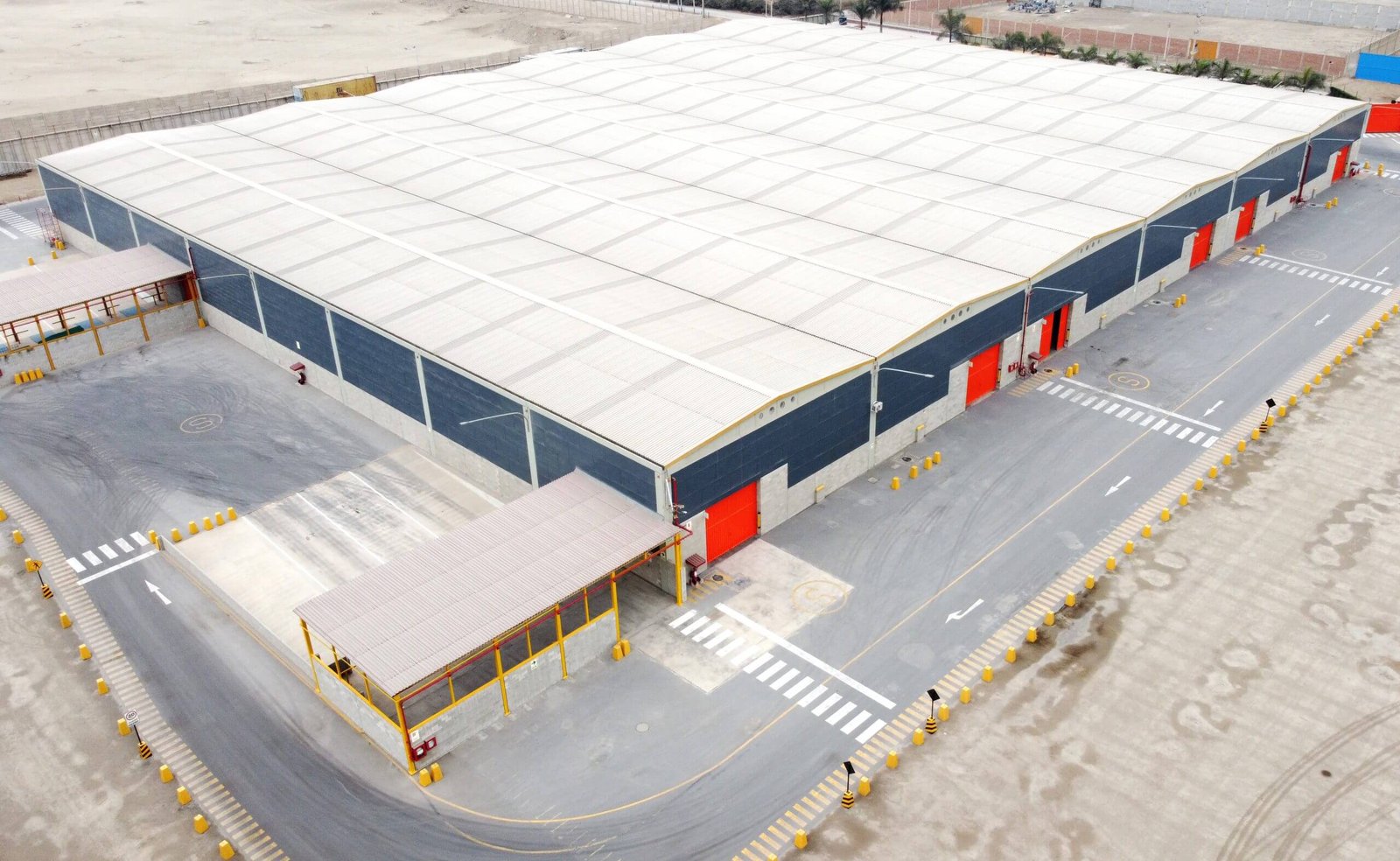
Distribution Center Construction in Pueblo
Distribution center construction in Pueblo and the Arkansas Valley: truck courts, dock layouts, racking-ready slabs and sites on I-25, US 50 and SH 47.
- Category
- Building Types
- Area
- Pueblo and southern Colorado
- Next Step
- Request a Project Review
Distribution buildings live and die on the truck court. Before anyone talks about clear height or rack layout, ask how many trailers need to stage, how they turn, and where they enter and leave. Pueblo's road system gives you good answers: I-25 and US 85 run together through the city, US 50 crosses east to west, and State Highway 47 loops off US 50 as a six-lane divided road with diamond interchanges at Jerry Murphy Road and Troy Avenue.
We build distribution centers for owners who move product by truck and, in some cases, by rail. The shell is the easy part. The hard parts are the apron paving, the dock layout, the sprinkler design for the stored goods and the electrical service for conveyors, chargers and lighting. We plan these together so one does not wreck another halfway through the job.
Our project teams manage ground-up distribution buildings, expansions, cross-dock additions and conversions of older industrial space. We tell you early which of those paths costs less for your use. Sometimes an existing building with a new dock wall beats a new shell, and sometimes it does not.
What decides the layout
Start with the flow. Inbound and outbound doors on opposite walls give a cleaner cross-dock pattern, while doors on a single wall suit a smaller building with a tight lot. Truck courts commonly run 130 feet or more from the dock face to the far edge for tractor-trailers to maneuver, and a separate employee and visitor parking area keeps cars out of the truck path. A drive that looks fine on paper can fail when a 53-foot trailer has to swing through it.
The second decision is storage height. Taller racks mean fewer square feet per pallet position, but they require thicker slabs, tighter floor flatness, higher sprinkler demand and sometimes a fire pump. We walk through those costs with you so you can compare a taller, smaller building against a wider, shorter one. If you also run a general warehouse, the same questions apply with fewer moving parts.
Corridors we plan around
Pueblo's freight geography is straightforward. Interstate 25 exit 94 serves State Highway 45, Pueblo Boulevard, on the south side, and the highway runs about nine miles north to US 50 at Pueblo West. State Highway 47 begins at the interchange with I-25 exit 101 on the north side. Both give trucks a way around central streets. A site on either corridor saves minutes per run and keeps drivers off residential roads.
Rail and air add options. The city lists the St. Charles Industrial Park with rail freight access, and BNSF and Union Pacific both serve Pueblo. PuebloPlex describes logistics among its target uses on its large acreage east of town. East along the valley, BNSF runs freight through La Junta, which matters for operators serving the plains. You can read more about our work with logistics and distribution owners and the Pueblo Boulevard corridor.
How we run a distribution job
We begin with a program meeting: throughput, SKU profile, shift patterns, dock count and future expansion. Then we price by system so you see the effect of every choice. The civil work usually gets the most attention early because grading, detention and truck court paving can take a large share of the money on a lot built for heavy truck traffic.
During construction we sequence the building so the dock side and truck court finish early, because those areas drive the move-in. We coordinate your racking and automation vendors with the slab pour and electrical rough-in so embeds, trenches and power are in the right place. For clients who want one team from sketch to keys, distribution center construction can also be delivered through design-build.
Services that tie in
Distribution work sits on top of several trades. Truck courts and dock aprons need a proper concrete or heavy asphalt section, drainage that does not pond in front of doors and joint spacing that survives repeated braking loads. Our truck court and dock apron work covers all of that. Utilities and storm design come through site development.
We also handle the quieter items: temporary power for your fixture install, commissioning of fire and life safety systems, and closeout documents your lender or insurer will ask for. Those late tasks hold up more openings than the structure does. Getting them scheduled from the start is part of what we do.
Safety on active freight sites
Distribution expansions often happen beside moving trucks. We separate construction traffic from customer traffic, mark pedestrian routes and brief subcontractors on the site's rules before they start. Crane lifts get a lift plan, and anything over a live dock is scheduled for a quiet window.
Fire protection is the other compliance item. Storage commodity, rack height and aisle width decide the sprinkler design, and the local fire official reviews it. The Pueblo Regional Building Department lists the 2021 IFC among codes in effect, so we design to that edition and bring the fire reviewer in early when a design is unusual.
Where we build
We take distribution work across the Pueblo metro and the Arkansas Valley. That includes Pueblo and Pueblo West, the airport industrial park and the corridors east toward Avondale and La Junta. La Junta sits 68 miles east of Pueblo on US 50 and is the point where BNSF runs freight between the Front Range and Kansas and Texas.
Farther south, Walsenburg is 48 miles south of Pueblo on I-25, with Trinidad another 36 miles on. If you are choosing between sites, we can help you compare haul distances and local costs. The airport industrial park is the one we visit most.
Talk through your freight site
Tell us your throughput, trailer count and the corridor you prefer, and we will give you a straight read on layout, schedule and cost. If your plan is closer to a fulfillment operation, we can build that too.
Questions Owners Ask
How much truck court depth do we need?
Plan on enough depth for a full tractor-trailer to back into the dock and for another to pass behind it, which usually means 130 feet or more from the dock face. Cross-dock layouts need room on both sides. We lay out the turning paths on your actual lot before the building footprint is fixed, because a few feet of depth can change how much building fits on the parcel.
Can a distribution center use rail service in Pueblo?
Yes, if the site has access. The city lists the St. Charles Industrial Park with rail freight access, and both BNSF and Union Pacific serve the area. A spur needs a track design from the railroad, a slab that handles the wall pockets and a layout that does not block truck circulation. We coordinate with the owner and railroad early because their review can take as long as the building design.
What slab do we need for high-bay racking?
The slab thickness and reinforcement depend on rack loads, lift trucks and subgrade strength, and the racking engineer gives us the point loads. Floor flatness and joint spacing matter as much as thickness. We build to a flatness specification that fits your lift equipment and pour in a sequence that limits curling.
How do you handle an expansion next to an active dock?
We build a separate work zone, shift crane lifts and tie-ins to off hours and keep a clear path for your trucks. The schedule is shared with your operations team weekly so changes do not surprise anyone. Utility cuts and fire system work are the items we plan most carefully.
Is a new building cheaper than converting an old one?
Not always. A conversion saves on shell cost but may need a new roof, new dock walls, upgraded sprinklers and a floor that cannot carry rack. We assess the existing structure, price both options and tell you where the break-even sits.