
Structural Steel Erection in Pueblo
Structural steel erection in Pueblo and the Arkansas Valley: shop drawing review, crane plans, bolting and welding, decking and punch lists for owners.
- Category
- General Contracting Services
- Area
- Pueblo and southern Colorado
- Next Step
- Request a Project Review
A mill that rolls rail up to 480 feet long has a way of making a steel contractor humble. Pueblo's south side has been turning out steel since the Colorado Fuel and Iron works began producing on April 12, 1881, and the electric-furnace, rail, rod, bar and seamless tube mills are still running. People here know what steel weighs, how it moves and what happens when a piece goes up wrong.
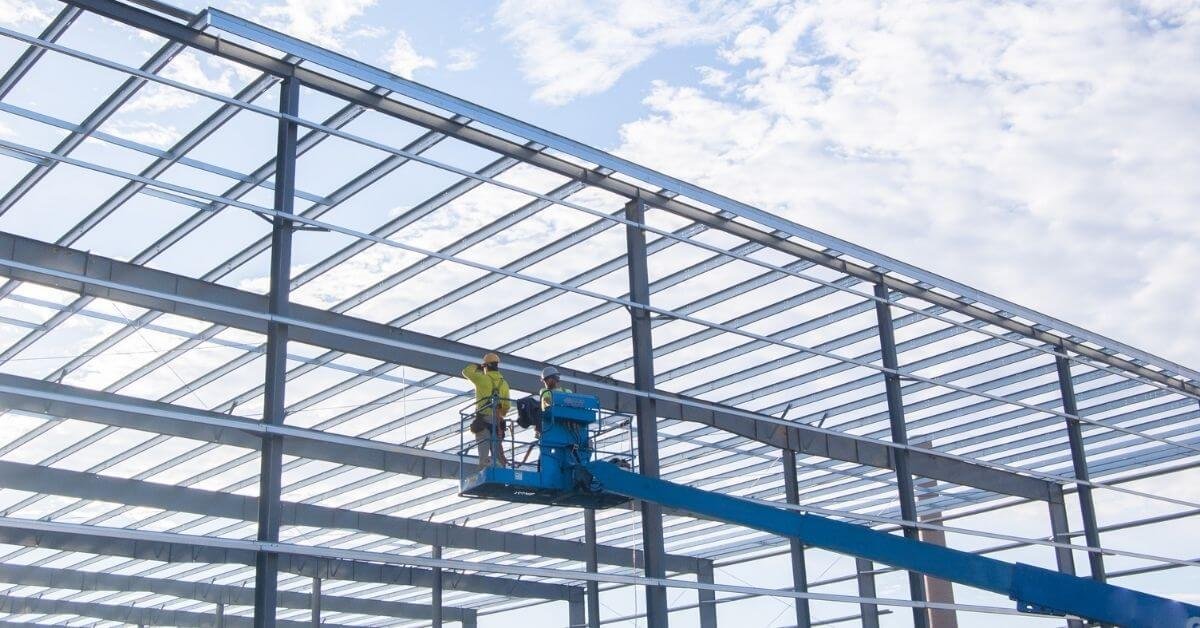
We manage structural steel erection for commercial, institutional and industrial buildings, and we treat it as a sequence rather than a delivery. Shop drawings are reviewed, anchor bolts and rods are surveyed before the first column arrives, the crane is chosen for the heaviest pick and the longest reach, and the bolting and welding follow an order that keeps the frame plumb as it grows. Mistakes in steel are expensive, and most of them start on paper.
Whether the frame is a low-rise office, a manufacturing bay or a hangar, we run it to the same plan. Our pages on clear-span rigid frame buildings and crane buildings show how that thinking changes for each.
What we manage in the air and on the ground
We manage layout, anchor bolt and base plate setting, column and beam erection, bolting, field welding and metal decking with the erection trade partner. Base plates are set and shimmed to grout tolerance and we check plumb and level after each bay. Where a job needs a specialty welder, a certified inspector or a crane operator with a specific rating, we bring one in and keep the paperwork on the job.
We do not take on every steel package, and we say so when a project exceeds what we should handle. For very large or highly specialized frames, we coordinate with an erector who works in that niche and manage the interface with the rest of the site work. That keeps quality up and keeps the owner from paying for a learning curve.
Falling objects, falling workers
Steel work is one of the most hazardous parts of any building, so we plan fall protection, controlled decking zones, tie-off points and lift procedures before the first beam is swung. Every pick has a plan: weights, radii, rigging and a clear exclusion zone below. Weather calls, particularly high wind, can stop a lift outright, and we do not argue with the forecast.
Crews hold daily tailgate meetings and the site has a competent person who can stop work. We keep other trades out of the erection area and route deliveries so that trucks and cranes are not working over each other. An owner on an occupied campus or a working plant should insist on the same discipline from any erector.
From shop drawings to punch list
The scope begins well before steel arrives. We review shop drawings against the structural set, check connection details with the engineer and confirm the sequence in which the fabricator will ship. We survey the foundation and anchor bolt layout, because a bolt off by a quarter inch can hold up a day of work, and a bad one can hold up a week.
After erection we complete field welds, torque or inspect bolts, install decking, and attend special inspections. We coordinate touch-up of shop coating and deliver a punch list that the engineer of record can close. If steel is the structure but not the whole job, we link the work to tilt-wall construction panels, masonry and roof systems.
Why steel schedules slip, and how we keep them honest
Most delays are on the front end: fabricator backlog, late shop drawing approvals and slow foundation work. We confirm the mill order and the fabrication slot at award, and we push the design team for fast turnaround on submittals. If the steel is the long pole, we say so in the first schedule.
Once steel is on site, a mid-size building often goes up quickly, but weather and crane availability can shift dates. We hold a crane reservation and a backup plan. The calendar matters to owners with a loan draw or a lease date, and they get a candid date, not a hopeful one.
Where steel meets the rest of the building
Steel rarely stands alone. It needs foundations, slabs, roofing, exterior walls and mechanical systems. When we run the whole job, we coordinate those pieces so the steel crew is never waiting on concrete, and the roofers are never waiting on the deck. For a larger, phased job the construction management at risk model keeps those handoffs visible.
We also add steel to existing buildings: mezzanines, rooftop equipment platforms, canopies and tenant structural upgrades. In older downtown buildings, such as those in the Union Avenue Historic District, adding steel means working carefully around historic masonry, so we plan temporary shoring and a clear load path.
Engineering, inspection and code
In Pueblo and Pueblo County the Pueblo Regional Building Department lists the 2021 IBC and companion codes as in effect, with the 2023 NEC. The structural engineer of record sets the design loads and the connection criteria, and we build to that package. If the engineer revises a connection after approval, we log it, price it and make sure the revised drawings reach the shop.
Special inspections for welding, high-strength bolting and decking are required on most commercial frames. We schedule them with the testing agency and keep reports organized, because an inspector's signature is part of the closeout. If your project falls under a different jurisdiction in the Arkansas Valley, we check its adopted code first.
Get a steel erection plan
Share the structural drawings or the preliminary framing plan. We will review the steel, talk through the crane and the sequence, and give you a price and a schedule you can use. Owners of hangars and public buildings can also read about aircraft hangars and government and public-sector work.
Questions Owners Ask
How long does a steel frame take from award to topping out?
The fabricator's backlog and the mill order usually drive the first part, which can run weeks to months. Once the steel is on site, erection is typically much faster than the lead time. We give a schedule that starts at award and names each milestone.
Can you erect steel supplied by someone else?
Yes. We will erect steel from your fabricator or the owner's supplier, provided shop drawings and the delivery schedule come through us. We check that the material matches the drawings and flag any problem before we mobilize, so you are not charged for a crane waiting on a missing piece.
What causes steel costs to jump?
Mill pricing, connection complexity and the crane. A structure with many different member sizes and complicated joints costs more to fabricate and more to erect. We help owners and design teams simplify connections and repeat member sizes where it does not hurt the design.
Do you work on occupied or active sites?
Yes, with planning. We stage steel away from operations, schedule heavy picks during off-hours when the owner prefers and keep exclusion zones clear. For manufacturing clients with live production, that planning is the heart of the job.