
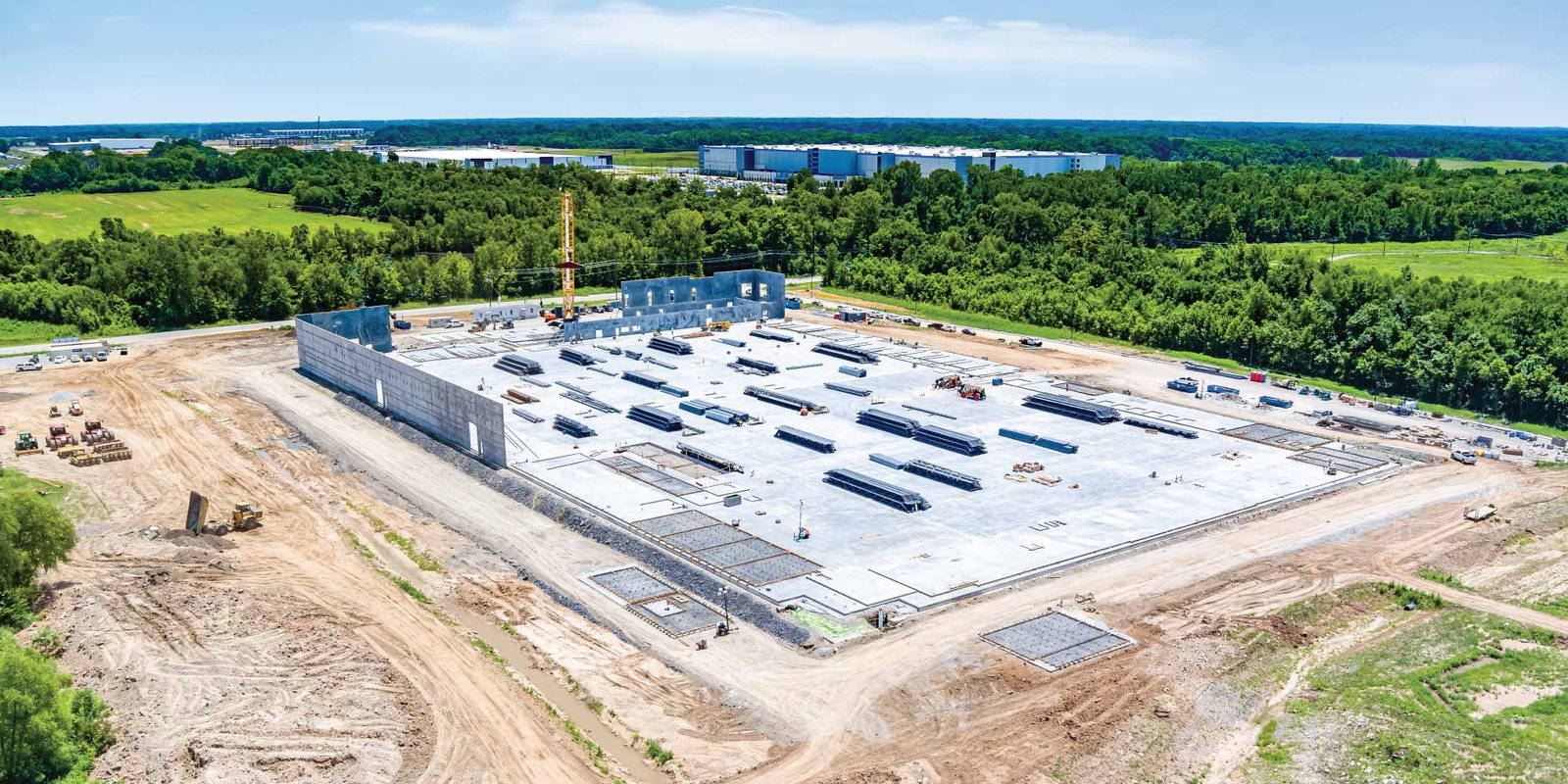
Manufacturing Facility Construction in Pueblo
Plant and shop construction in Pueblo and the Arkansas Valley: heavy slabs, crane bays, process utilities and phased expansions built on a plain budget.
- Category
- General Contracting Services
- Area
- Pueblo and southern Colorado
- Next Step
- Request a Project Review
A Pueblo industrial park already holds nearly 700,000 square feet of wind tower plant, and the owner broke ground in April 2023 on a 900,000 square foot expansion aimed at about 10,000 tower sections a year. Pueblo has made heavy things for a long time, and it has the buildings to show for it. A manufacturing facility here is not a warehouse with a few machines inside. It is a structure built around the equipment, the loads and the people who run them.
We build manufacturing plants, fabrication shops and process buildings for owners who need the floor, the power, the crane and the dock to line up on the first day of production. That means working from the process backward: what is the heaviest piece, how does material enter and leave, where do utilities drop, and how does the building grow when the line does. We would rather ask those questions in preconstruction than discover the answers after the slab is poured.
If you are comparing delivery methods, our notes on design-build delivery show how one team can carry a plant from layout to commissioning. Manufacturers across the region also read our manufacturing industry page before they call.
What goes into a plant, beyond four walls
The envelope is the easy part. A manufacturing job usually adds reinforced slabs with embedded trenches and pits, equipment foundations isolated from the floor, heavy electrical service, compressed air, process water and drainage, and sometimes a clean or conditioned zone. We carry the building scope and coordinate the trades and the equipment vendors who set machines on our pads.
We also plan for what comes after day one. Knock-out wall panels, extra utility stubs and a site layout that leaves room for the next bay save an owner real money when volume grows. Structure choices matter here, and we price tilt-wall, metal building and conventional steel against each other so you see the trade-off in dollars. Our page on tilt-wall construction covers one of those options in detail. Owners planning a vehicle or EV plant can compare these needs with our page on automotive and EV plants.
Steel, rail and wind towers shape the local standard
This is a mill town, and the expectations show. EVRAZ Rocky Mountain Steel is listed with 931 employees as one of the city's largest employers, and the rail mill there can now roll rails up to 480 feet long, up from an earlier 80 foot limit. Buildings that handle a product that long, hot and heavy are built differently from a typical light industrial shell, and contractors here learn that quickly.
The same industrial base creates a deep local labor pool for welding, steel fabrication, rigging and concrete. When we staff a plant job we draw on that pool, and we plan around the fact that large projects in the area compete for the same skilled trades. The wind tower expansion alone was announced with at least 850 new jobs, which tells you how much demand a single plant can put on local crews.
Work we manage most closely
We schedule and supervise the concrete work that heavy buildings depend on: footings, pads, slabs on grade and equipment foundations. Managing that work directly gives us control over placement quality, cure schedules and the pour sequence, and it is where most plant schedules are won or lost. Every trade partner is held to the same standard, with the same inspection and the same sign-off.
For steel-intensive jobs we manage erection and set the crane plan. Heavy lifts are planned with the rigger and the structural engineer before anyone picks, and our crane buildings work is a good example of how we think about runway beams and column loads.
Services that usually travel with a plant job
Most plants need site work before they need a building. Grading, utilities, stormwater and truck access are all part of the same budget and the same schedule, and we handle them under site development and utilities. A new plant on raw ground can spend as much on infrastructure as on structure if the utilities are far away.
Some owners also want help before design is complete. Our preconstruction team can test layouts, price options and flag long-lead items such as switchgear and structural steel. That early work is cheap compared with redrawing a plan after bids come back.
Working in and around active industrial sites
Plant expansions often happen next to running production. We separate construction traffic from plant traffic, schedule noisy or disruptive work for planned shutdowns and keep fire watches and hot work permits in order. On a mill-adjacent site, the owner's own safety rules apply on top of ours, and we train the construction trade partners to follow both.
We write a site-specific safety plan for each job, including lift plans, excavation protection and fall protection for roof and steel work. Subcontractors are expected to follow it, and we stop work when conditions change. A plant owner should expect a contractor who raises a safety problem before it becomes an incident, and who has the authority to stop a lift or a pour when the conditions are wrong. We budget for that discipline instead of treating it as overhead.
Decisions to make early
Three choices drive a plant budget: floor design, clear height and utility capacity. Heavy forklift traffic or press loads can double slab cost, and a taller building raises structural cost fast. Power is often the long pole, so we start the utility conversation as soon as the site is picked, not when drawings are done.
Permitting can be quick if documents are complete. Pueblo's building department enforces the 2021 I-codes and the 2023 NEC, and an incomplete submittal adds weeks. We prepare the package, track comments and keep your engineers on a short leash with plan review.
Talk through your plant with us
Bring the process drawings, the equipment list or even a sketch. We will tell you what the building and site will cost, how long it will take, and where the risks are. We know the heavy industrial ground around the Minnequa and South Side steel mill area, and we will tell you what that ground means for your budget.
Questions Owners Ask
Can you build around equipment we have not bought yet?
Yes, with allowances and flexibility built in. We design the slab and utilities for the heaviest and most demanding equipment you might buy, and leave pads and stubs where reasonable changes can be absorbed. It costs more than building to one machine, but less than tearing out a floor later.
How long does a manufacturing building take in this market?
A small shop can finish in several months. A large plant with heavy foundations, process utilities and a crane system usually takes far longer, and long-lead electrical gear can set the end date. We build a schedule backward from your production start and tell you which items need to be ordered now.
Do you handle rail or truck access?
We build truck courts, docks and site circulation as part of the job. Rail spurs involve the railroad and its design standards, so we coordinate with the carrier early. Pueblo is served by both BNSF and Union Pacific, which is part of why industrial users locate here.
Is a phased build realistic for a growing company?
Often it is the smartest approach. We build the first phase with the second phase in mind, leaving the footings, slab edges and utility capacity ready. You spend a little extra now and avoid shutting down production to retrofit later.