
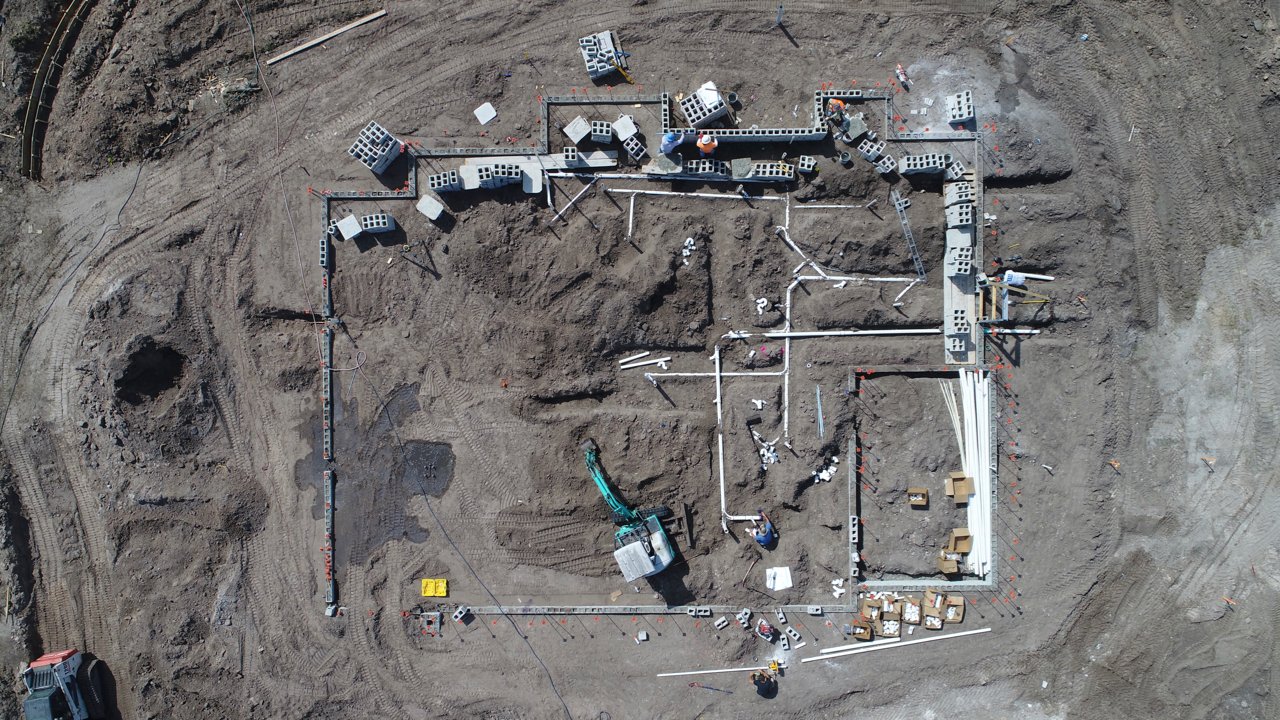
Site Development and Utilities in Pueblo
Grading, water, sewer, power, drainage and paving for Pueblo and Arkansas Valley projects, priced and sequenced before the building starts.
- Category
- General Contracting Services
- Area
- Pueblo and southern Colorado
- Next Step
- Request a Project Review
Under every building there is a pad, and under every pad there is a utility plan that someone has to pay for. In Pueblo, the redevelopment of the old Army depot east of town is being planned around a site of roughly 16,000 acres with more than 600 buildings plus utility and transportation systems. That scale is unusual, but the question it raises is not: how do water, sewer, power and roads reach the building, and what does it cost to get them there?
Site development is the work that answers that question. It covers clearing, grading, soil work, underground utilities, drainage, roads, parking and the final surface. On many industrial and commercial jobs the site package is a large share of the total budget, and it controls the schedule, because nothing can be built until the pad is ready. We treat it as a main piece of the project, not an afterthought.
We handle site work as part of a full building contract, and we also take on site-only packages for developers who want a ready pad. For earthwork on its own, see mass grading, and for water management, see stormwater and drainage.
What the site package includes
The usual sequence begins with a survey, clearing and erosion control, followed by rough grading and soil work. Then comes the underground: storm drains, sanitary sewer, water mains and services, fire lines, electric and communications conduits, and gas. After that we finish the subgrade, place base material and pave or pour the surfaces, including truck courts, drives and parking.
We coordinate with the utility providers, who control their own schedules. A water tap, a power transformer or a gas service can take weeks to months to arrive, and we request them as soon as the plan is approved. Our notes on parking lot construction describe the surface work that closes out the site.
Approvals before dirt moves
Site work needs grading permits, erosion control plans, utility permits and often a stormwater plan. Pueblo West is an unincorporated community governed by Pueblo County, so a site there goes through county processes, while a site inside the city of Pueblo goes through city review. We confirm the path first, because it affects the calendar.
The city lists commercial approvals at about 75 days in its downtown opportunity zone, which gives a rough sense of review time even for sites outside it. Colorado codes are adopted locally, and in Pueblo County the building department lists the 2021 I-codes and the 2023 NEC as in effect. We build permit time into the schedule instead of assuming the best case. For help with the approval path, see our page on permitting and entitlements.
Ground, water and history
Local ground conditions deserve respect. The 1921 flood, the largest in Pueblo's history, sent water as deep as 18 feet through downtown, after which the Arkansas River was rerouted. Floodplain and drainage questions are real on sites near the river and its creeks, and a site that looks dry may have a history. We review mapping and talk to the engineer before we promise a pad elevation.
Large projects also change the water picture. The Arkansas Valley Conduit, a 230 mile pipeline from Pueblo Reservoir to Lamar and Eads serving communities, broke ground October 3, 2020 at Pueblo Dam. Infrastructure work like that affects water supply plans, easements and the availability of qualified pipe crews. Owners near Lake Pueblo and Pueblo Dam should ask about easements and access early.
Where we do site work
We work across Pueblo County and the Arkansas Valley, from Pueblo West, which sits at 5,033 feet and covers about 49 square miles, to larger industrial tracts east of the city. Each area brings different utility providers, soil types and review authorities, and we adjust the plan.
The largest sites, like PuebloPlex, come with their own utility and transportation networks. For a tenant or builder there, connecting to existing infrastructure can save money, but only if capacity and condition are confirmed. We do not assume that a line that exists on a map has capacity to serve you.
Sequencing the dirt work
Weather matters for site work more than for almost any other trade. Wet ground cannot be compacted well, and frozen ground cannot be graded or trenched easily. We plan earthwork for the drier seasons when possible and protect the work with erosion controls.
We also stage the site so that other trades can move in. Building pads are finished first, roads for deliveries are laid early, and utilities are brought to the building in time for rough-in. A crew waiting on a trench is expensive, and a trench open too long is a hazard.
Trenches, traffic and buried lines
Excavation is a top cause of serious accidents. We shore or slope trenches to the required standards, test the air where needed, keep spoil piles back from edges and assign a competent person to inspect every day. Before digging we call for utility locates and potholes to find lines that records may miss.
On active sites we separate trucks from workers, use spotters and keep the public out. If a line is hit, the response plan is already written and the crew knows it. Owners should expect to see these details in any site contractor's plan.
Start with the ground
Send us the parcel, the survey and any soils information. We will tell you what the site will cost to ready, how long the approvals and utilities will take and what could go wrong. Then we can price the building on a pad we trust.
Questions Owners Ask
How much of my budget should I expect for site work?
It varies a great deal. A flat parcel with utilities at the edge costs far less than a sloping site a long way from services. We provide a site estimate early and update it when the survey and soils report arrive, so you can see what the land is really costing.
Who pays to extend utilities to my site?
It depends on the utility and the local rules. Some costs fall on the owner, some on the utility, and some are shared. We ask the providers for written requirements and fee schedules before we finalize a number.
Do I need a geotechnical report?
Yes, in nearly every case. It shows soil bearing, groundwater, expansive or collapsible soils and the pavement design basis. A report costs little against the risk of guessing, and we use it to price over-excavation and fill.
Can you build a pad-ready site for a speculative developer?
Yes. We can deliver graded, utility-served lots with paved access so that a tenant or builder can start vertical work. Government and public-sector owners also hire us for yard and access work, and we adjust the scope to their rules.
What about stormwater detention?
Most commercial sites need it. The size and type depend on the engineer's design and the local standards, and it takes land. We place it in the plan early so it does not take the building's space late in design.