
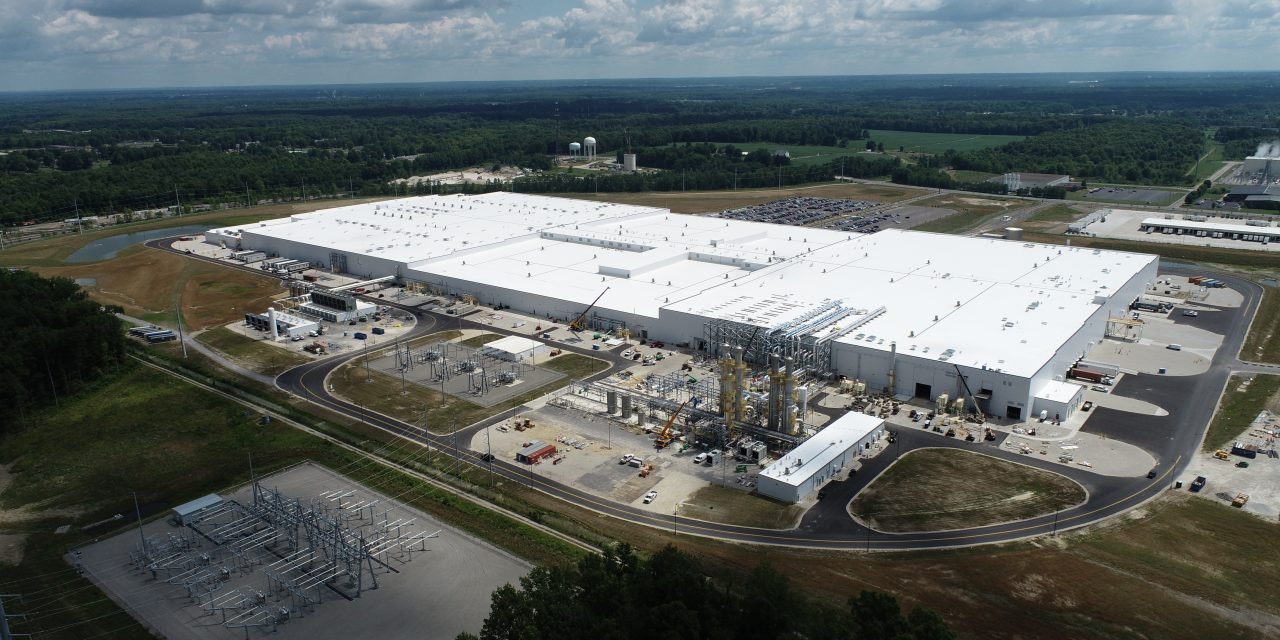
Automotive and EV Plant Construction in Pueblo
Automotive, battery and EV supplier plant construction in Pueblo: heavy slabs, crane steel, utility backbone and a permit path, priced plainly.
- Category
- Building Types
- Area
- Pueblo and southern Colorado
- Next Step
- Request a Project Review
Nobody finishes a vehicle or battery plant before the equipment shows up, so the building gets designed backward from the line. Body-in-white cells, stamping presses, battery cell and pack halls and paint shops each arrive with their own demands for floor flatness, pit depth, power, compressed air and process water, and the shell has to be sized around them. We build the shell, the slab, the site and the utility backbone so the equipment installers walk onto a floor and a feeder that match their drawings.
Pueblo already knows what a heavy single-owner build does to a town. EVRAZ Rocky Mountain Steel broke ground on a solar-powered rail mill reported at $500 million, with about 800 construction jobs and a 240 megawatt on-site solar field. CS Wind broke ground in April 2023 on a 900,000 square foot expansion of its wind tower plant, aiming for about 10,000 tower sections a year. Both are production buildings with overhead cranes, thick slabs and big power service, which is the same family of work as an automotive plant.
If you are comparing Pueblo with other sites for an assembly, stamping, battery or supplier plant, what you want from us early is a shell price, a utility timeline and a permit path in writing. We give those numbers straight, and we tell you which line items are firm and which depend on equipment you have not yet bought. Our manufacturing plant work is the starting point, and an automotive building is a tougher version of it.
Why a heavy-industry town fits
The city of Pueblo says commercial and industrial construction here costs about 10 to 15 percent less than the national average. That is a statement from the city, not a bid, and your own number will depend on the design. It still matters on a building where the shell is a large share of a nine-figure budget, because a few points on a million-square-foot floor add up fast.
Logistics matter as much as the price. Interstate 25 and US 85 share one route through Pueblo, US 50 runs east and west, and BNSF and Union Pacific both serve the city. An automotive plant moves parts in and finished product out on a schedule measured in hours, so truck access and rail spurs belong in the first site sketch. The Pueblo West industrial area and the PuebloPlex campus are the two places we would look first for large flat parcels.
Codes, energy rules and who reviews the drawings
The Pueblo Regional Building Department lists the 2021 International Building Code, the 2021 energy and fire codes and the 2023 National Electrical Code as the editions in effect for Pueblo and Pueblo County. Colorado does not run one statewide commercial building code, so each jurisdiction sets its own editions, and a site outside city limits can land under a different set. We confirm the authority having jurisdiction before we price anything.
The state also requires any jurisdiction that updates its building code after July 1, 2023 to adopt an energy code at least as strict as the 2021 IECC, with a lower energy and carbon benchmark taking over from July 1, 2026. For a plant with a large conditioned office, lab or battery dry room, that affects insulation, lighting power and electrical readiness. Process areas are a separate matter: paint booths, battery chemistry and hazardous storage bring fire-code and occupancy questions we raise in the first design meeting, not at permit review.
What the shell, slab and site really include
The shell for an automotive building is usually a tall, wide steel frame with crane runways, large roof loads for process piping, and a slab thick enough for press foundations and heavy racking. Press and conveyor pits are cut into that slab, so waterproofing and the order of pours are planned before anyone orders rebar. We coordinate with the equipment supplier on anchor bolt patterns, because bolts set a quarter inch off cost days later.
Outside the walls, the work is truck courts that take loaded trailers all day, employee parking, stormwater detention and a utility corridor that often carries electric, gas, water and wastewater at larger sizes than a warehouse needs. See our site development and utilities and commercial concrete floors work for how we handle those pieces.
Where the money goes before the first car does
Three things move the price more than anything else on this building type: electrical service, floor design and the amount of process work the shell has to carry. A plant that needs its own substation or a utility upgrade should expect that item to set the schedule and a good part of the budget. Floor tolerances for automated guided vehicles and precision lines raise slab cost, and steel for crane and mezzanine loading raises the frame cost.
We also watch the contract structure. When the contractor relationship on Pueblo's rail mill broke down in January 2023, 666 contract workers were let go and the owner's subsidiary sued for damages above $130 million. We take it as a warning about scope and delay terms, not a story about anyone else. On a plant this size we want the scope, allowances and equipment turnover dates written down before the first pour, and a clear owner decision path when drawings change.
Sequencing around equipment dates
The critical path on an automotive plant runs through long-lead items: structural steel, switchgear, transformers, cranes and the process equipment itself. We order steel and electrical gear as soon as design allows, and we sequence the building in zones so equipment setters can start in one bay while we finish another. That works best when the owner commits to a phasing plan early and holds to it.
Weather is a smaller factor here than lead time, but Pueblo winters still shape slab pours and roof work, and we plan concrete and enclosure dates around them. A tight schedule that depends on dry January weather for a slab is a schedule with a hole in it, so we build in enclosure milestones before cold-weather work starts.
Services that travel with this building
Owners usually bring us in through design-build delivery or preconstruction estimating, and we favor starting there because early pricing keeps the building and the equipment plan from drifting apart. For multi-bay plants, phased construction on occupied sites covers expansions that must run while production continues.
Many of these buyers come from manufacturing and from logistics and distribution, and the shared lessons from those markets apply to a vehicle plant: a clean flow of material, honest dock counts and a floor built for the loads that will actually roll across it. Our distribution center pages cover the receiving and shipping side of that flow.
Talk to us before the equipment list is final
Send us the line layout, the target square footage and the utility load, and we will come back with a shell budget, a schedule and a short list of risks. Pueblo gives you room, rail and a city that prices construction lower than the national average.
Questions Owners Ask
Is there an existing automotive cluster in Pueblo?
Not one we can point to from public records. What the area does have is heavy production: a steel and rail mill, a large wind tower plant and a growing defense and aerospace campus at PuebloPlex. A supplier plant here would be building its own supply base, so we help owners look hard at trucking, rail and labor before they commit to a parcel.
How big a site do I need for an assembly or battery plant?
That depends on the line, but expect far more land than the building footprint. Truck courts, employee parking, stormwater detention and future expansion pads often double the acreage. The PuebloPlex redevelopment organization has taken over thousands of acres of former depot land, and those large parcels are worth a look for projects that need room.
What usually delays a plant like this?
Electrical service and long-lead equipment, nearly every time. Utility upgrades and switchgear can take longer to arrive than the building takes to go up. We ask for the utility load letter and the equipment delivery dates in preconstruction and build the schedule around the longest item, not the shell.
Can we start the shell before the equipment is selected?
You can start the foundations and frame, but the slab and pits are risky to pour without final equipment data. We usually recommend a bay-by-bay approach: shell and enclosure first, then slab sections as equipment drawings are released. It costs a little in sequencing and saves a lot in jackhammering.