
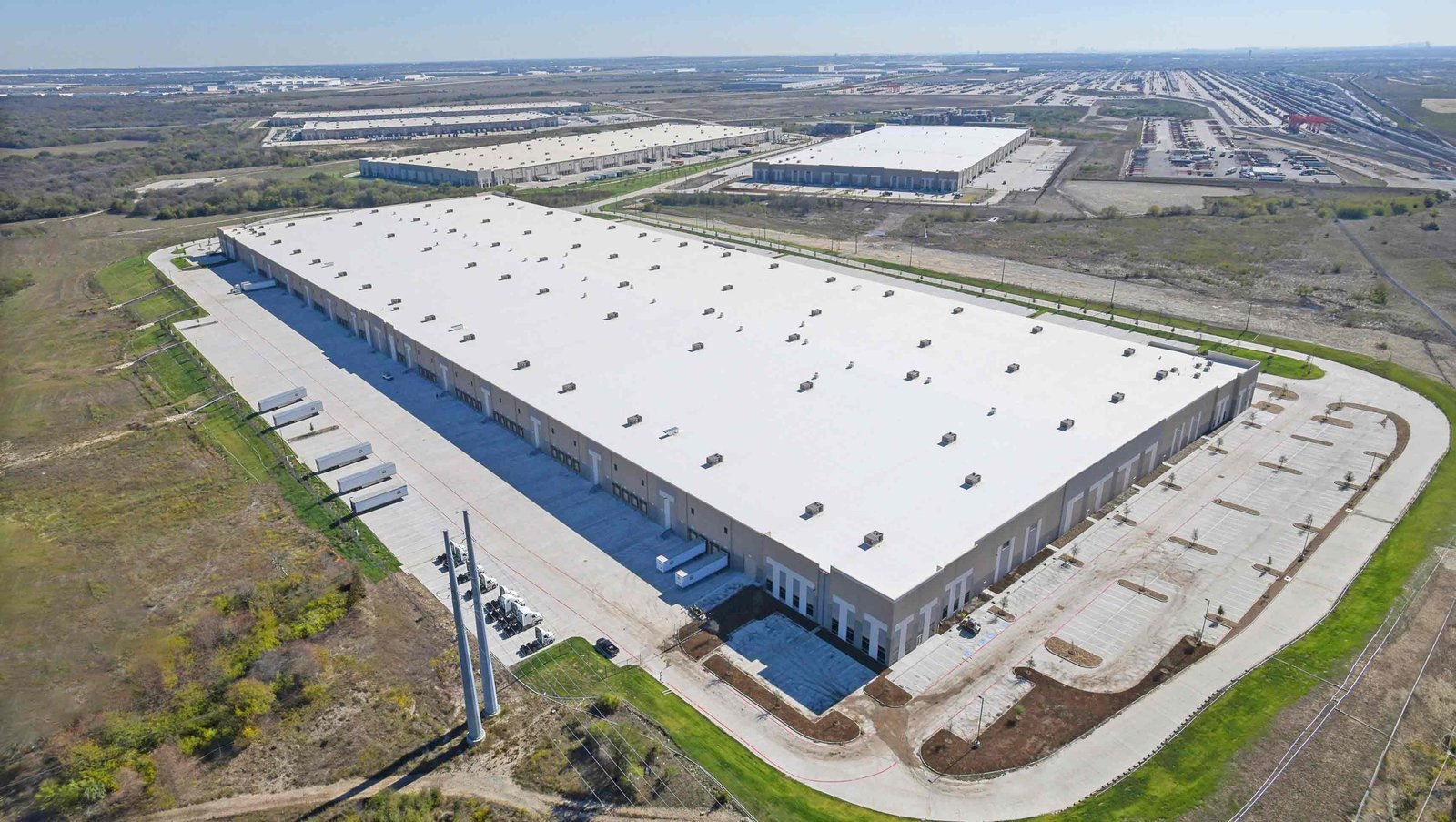
Fulfillment and Logistics Center Construction in Pueblo
Fulfillment and parcel logistics buildings in Pueblo: mezzanines, sortation floors, truck access and power sized for fast-turn operations.
- Category
- General Contracting Services
- Area
- Pueblo and southern Colorado
- Next Step
- Request a Project Review
Exit 101 on Interstate 25 is where northern Pueblo sorts itself out. State Highway 47 begins there at a single-point urban interchange that also ties in US 50, US 85 and US 87, and the highway runs east as a six-lane divided road for under five miles to meet US 50 and SH 96 again. For a fulfillment operator, a site on that loop means trucks can reach the interstate, the east side and the airport road without crossing downtown.
Fulfillment is not storage. Orders arrive in lots of one, product moves by hand and by belt, and the building is judged by how many units it can turn per hour and how fast it can hit a cutoff. That changes what we build. We care about flatness, column grids that suit conveyors and mezzanines, power for automation and lighting, and truck access that keeps parcel carriers moving all day.
We build new fulfillment shells and we convert existing buildings, including the large empty retail boxes that are part of Pueblo's recent history. If the operation is closer to bulk freight than parcel, start with our notes on distribution center construction.
Why the north side, and why now
The mall corridor shows how the retail landscape has shifted. Pueblo Mall, at 3429 Dillon Drive, covers 575,000 square feet on one floor, and the building has seen change: a trampoline park opened in the former Sports Authority space in 2019, the same year Sears closed, and a fabric chain announced in February 2025 that it would close its mall store. That leaves large, well-located boxes whose owners are looking for new uses, and some can be adapted to light logistics.
The road network is the other draw. I-25 exit 104 serves Dillon Drive and Drew Dix Parkway on the north side, and the SH 47 freeway section has diamond interchanges at Jerry Murphy Road and Troy Avenue. Pete Jimenez Parkway branches east from the US 50 interchange toward the airport, so a last-mile or regional operator has several routes to choose from. Sites in the State Highway 47 corridor and the Pueblo Mall corridor should be on every buyer's list.
Shells, conversions and mezzanines
A fulfillment center can be a new tilt-wall or metal shell, a converted retail box or a leased bay in a flex building. The logistics and fulfillment center building type covers the common forms. Each has its own pros and cons: new shells give the best flow and clear height, conversions give speed and a lower price, and flex bays give flexibility to start small.
Mezzanines are central to many fulfillment plans, since they double the picking area without increasing the footprint. They need structural design, fire code review and egress, and the building often needs reinforced columns to support them. We price a mezzanine as a distinct scope item and ask the design team to check the main structure first.
Peak season is the deadline
Fulfillment operators run on seasonal peaks, and a building that is late by a month may be late by a whole season. We build the schedule backward from the day the operator needs to start receiving stock, and we separate the pieces that must be done from those that can follow. Racking, conveyors and the IT backbone often arrive after the shell.
The long leads are electrical gear, dock equipment and any sortation system. Conversions are quicker than new shells, but they bring unknowns, such as hidden structural conditions and roof age. We open up a building during preconstruction so that surprises come before the contract, not after. That means cutting test openings in the roof, checking the slab thickness with coring, and pulling the original drawings if the owner has them. A conversion priced from a walk-through alone is a guess, and we say so when someone asks us for one.
Working with the operator
We start with the operator's process flow: receiving, put-away, picking, packing, shipping and returns. A drawing that follows the flow makes the building efficient, and a drawing that follows the owner's preferred shape often does not. We ask for volumes, peak rates and growth targets, then size the building and the docks around them. Where the operator cannot yet say, we show a base case and an expansion case, so the first building does not box in the second phase. Operators in logistics and distribution should expect that question from any builder worth hiring.
Many operators prefer a single team for design and construction, and our design and build delivery page explains how we run that. For existing boxes, renovation and adaptive reuse describes how we handle surveys, structural checks and phased work.
Fire protection, egress and occupancy
Fulfillment buildings face tough fire protection rules because storage is tall and dense, and plastics are common. Sprinkler design must match the commodity and the rack height, and a mezzanine changes the analysis. The Pueblo Regional Building Department lists the 2021 IBC, IEBC, IECC, IMC, IFGC and IFC as in effect, and the IEBC matters when converting an existing building.
Occupancy changes can trigger upgrades to egress, accessibility, ventilation and the fire alarm. We review the existing building against the proposed use before the lease is signed, so the buyer knows the real price. The city lists commercial approvals at about 75 days in the downtown opportunity zone, so we submit complete packages early.
Start with the flow
Send us the process flow, the volume you expect and the date you need to open. We will give you a building concept, a conversion option if one exists, and a schedule that includes the long-lead items.
Questions Owners Ask
Can an empty retail box become a fulfillment center?
Often, yes, with limits. Clear height, column spacing, dock access and floor capacity are the usual constraints. Retail buildings tend to have few dock doors and low clear heights, so a conversion may add doors and structure. We survey the building and price the changes before you commit to a lease.
How much power does a fulfillment center need?
More than a standard warehouse, particularly with conveyors, sortation and heavy lighting. We ask the operator for the equipment loads early and check the utility service. A bigger service takes time to get, so we start the request as soon as the load is known.
How tall should the building be?
For parcel and e-commerce, clear height supports racking and mezzanines, but taller buildings add cost and sprinkler demands. We size the height to the inventory and the equipment, not to a standard number.
Do you build for retail-chain fulfillment?
Yes. Retail chains often need regional fulfillment close to stores, and we adjust the design to the chain's standards while checking local code.
Is the airport area worth considering?
For operators who value air access, yes. The Pueblo Memorial Airport industrial park sits about 6 miles east of downtown and has direct taxiway access on certain parcels. It is a niche choice, and we help you decide whether it justifies the premium.