
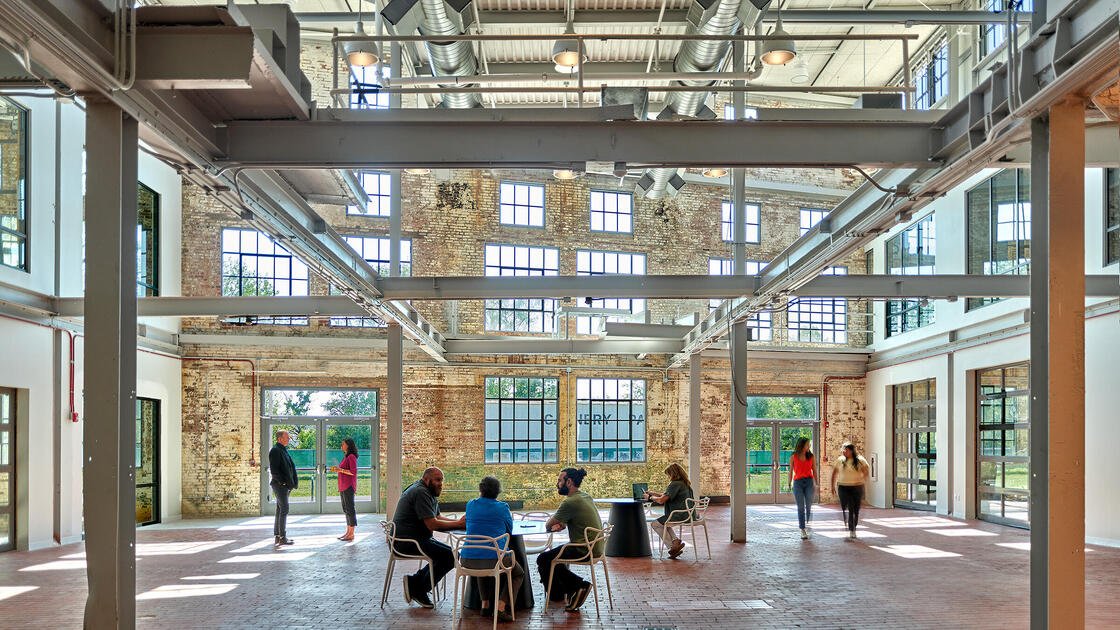
Renovation and Adaptive Reuse in Pueblo
Renovation and adaptive reuse of older Pueblo buildings, from downtown brick to PuebloPlex magazines, with surveys, shoring and honest contingency.
- Category
- General Contracting Services
- Area
- Pueblo and southern Colorado
- Next Step
- Request a Project Review
Sixty nine contributing properties sit on 27 acres of downtown Pueblo, and many of them were built in the 1880s. Union Depot, the Vail Hotel and the Quaker Flour Mill are among them. Brick walls that old were laid for a different city, and they have been through floods, fires, vacancies and many rounds of repairs. Bringing a building like that back into use is not new construction with an old facade, and nobody who has done it will tell you it is.
Renovation and adaptive reuse means taking an existing building and making it serve a new purpose, or the same purpose at a modern standard. That might be a mill turned into apartments, a warehouse converted to offices, a hotel brought back to life or a vacant retail box reworked into a clinic. The structure is already there, which saves time and materials, but it also hides things. We spend as much effort learning what is in the building as we do planning what to put into it.
We give owners a plain budget with the unknowns called out. Old buildings reward patient planning and punish optimism. If the numbers do not support a project, we will say so before anyone has spent real money on design.
Pueblo has a lot of building to reuse
The Union Avenue district downtown is the obvious place, but not the only one. The PuebloPlex master plan covers a roughly 16,000 acre site with more than 600 buildings, and the redevelopment organization rents over 1,000 earth-covered magazines, known as igloos, for storage. Those are not typical commercial buildings, and reusing them takes imagination and sound engineering.
The Colorado Mental Health Hospital in Pueblo sits on a 300 acre campus whose buildings date from additions across the late 19th century into the 1960s. Union Depot, built in 1889 and 1890 at Victoria Avenue and B Street, sits on tracks shared by two railroads, and regular passenger service has ended. Proposals for the depot include Front Range Passenger Rail and a possible Amtrak stop. Each of these buildings represents a question that an owner has to answer: what should it be next, and who will pay?
Existing building rules and historic review
The code that matters most for this work is the International Existing Building Code, and the Pueblo Regional Building Department lists the 2021 IEBC among the codes currently in effect, with the other 2021 I-codes and the 2023 NEC. The IEBC lets owners choose among compliance paths, and the choice affects how much of the old building has to be brought up to new standards.
Buildings in the Union Avenue Historic Commercial District may also face historic review of exterior changes. Before design starts, ask which reviews apply and what they cover. Our permitting group maps the approvals, because a change of use triggers more review than a repaint, and the time it takes can decide whether a project is feasible. The city says commercial approvals currently take about 75 days.
What gets done to an old building
Typical scope includes structural evaluation and repair, masonry restoration, roof and envelope work, new mechanical, electrical and plumbing systems, fire protection, accessibility upgrades, interior buildout and site improvements. Window repair or replacement is often the largest visible decision, and it affects energy performance, appearance and cost.
Floors need attention too. Old wood floors may need reinforcement for new loads, and old slabs may need patching or leveling before new finishes. The trade partners for concrete floor repair, level and add topping where needed. Where the building will be partly removed to open space, we plan shoring so the structure stays safe while walls and floors come out.
Hazardous materials and structural safety
Buildings from the 1880s through the 1960s often contain asbestos-containing materials, lead paint and other substances that were common then and are regulated now. We order a hazardous materials survey before work starts and handle abatement using licensed professionals. Selective removal happens under containment, with air monitoring. Nothing gets disturbed before the survey is in.
Structural safety deserves equal attention. Old timber, brick and iron can be strong, but they can also hide rot, rust and failed connections. We have an engineer inspect the building and we open walls and floors in key areas to see the actual conditions. Temporary shoring, bracing and protection go in before demolition begins. Crews work under a plan that covers fall protection, fire watch and dust, and that plan is posted on site.
Learn the building first
We start with a site walk and a review of any drawings, studies and past permits. Then we do limited investigation, such as test openings, moisture checks and measuring, to compare the drawings with reality. Old drawings are often wrong. We update the plans from what we find, so designers work from the actual building.
From there we build a phased plan that addresses structure and envelope first, then systems, then finishes. Weathertight early means interior work is protected. We keep a running list of discoveries and the cost of each, and we share it with the owner every week. The 1921 flood, which sent water as deep as 18 feet through downtown, is part of the history of many local buildings, and we look for the signs of it in basements and foundations.
Related work on the same project
Renovation rarely stands alone. Selective demolition opens the building for new work, and tenant improvements finish the interior for each occupant. Hotels and apartments bring their own needs, and each gets its own plan.
Owners drawn to adaptive reuse are often multifamily developers turning older buildings into housing, or cities and nonprofits reviving landmark structures. We coordinate the many parties that these projects bring together: designers, historic reviewers, lenders, funders and neighbors.
Deciding whether to reuse or replace
A building is worth saving when its structure is sound, its location is good and its form fits the new use. It is a harder case when the floor-to-floor heights are low, the column grid fights the plan or the systems are beyond saving. We help owners test the idea with a quick feasibility study: rough cost of reuse against the cost of new construction, with schedule and risk.
Ask lenders and funders early. Old buildings can have financing quirks, and appraisals sometimes lag. Plan for contingency larger than you would carry on a new building. We usually suggest a substantial allowance for unknown conditions, released only as they are confirmed. If the contingency is not used, it goes back to the owner.
Walk the building first
Tell us which building you are considering and we will walk it, look at what is known and give you a feasibility range before you spend on design.
Questions Owners Ask
How much more does renovation cost than new construction?
It depends on the building. Sometimes reuse is cheaper because the structure and envelope exist. Sometimes it costs more because of hidden conditions, hazardous materials and code upgrades. We do a feasibility study that compares both so you decide from numbers.
Do we need a historic review for a downtown building?
Maybe. Buildings in the Union Avenue Historic Commercial District may face review of exterior changes, and the specific rules depend on the designation and funding. We help identify which reviews apply before design is final.
What happens if we find asbestos or lead paint?
We stop affected work, test the material and use licensed abatement contractors to remove or encapsulate it. A survey before construction avoids most surprises. Abatement adds cost and time, and we build it into the plan.
Which building code applies to an existing building?
Pueblo lists the 2021 IEBC among the codes in effect, which provides rules for alterations, additions and changes of occupancy. Your architect and the building department choose the compliance path, and we price accordingly.