
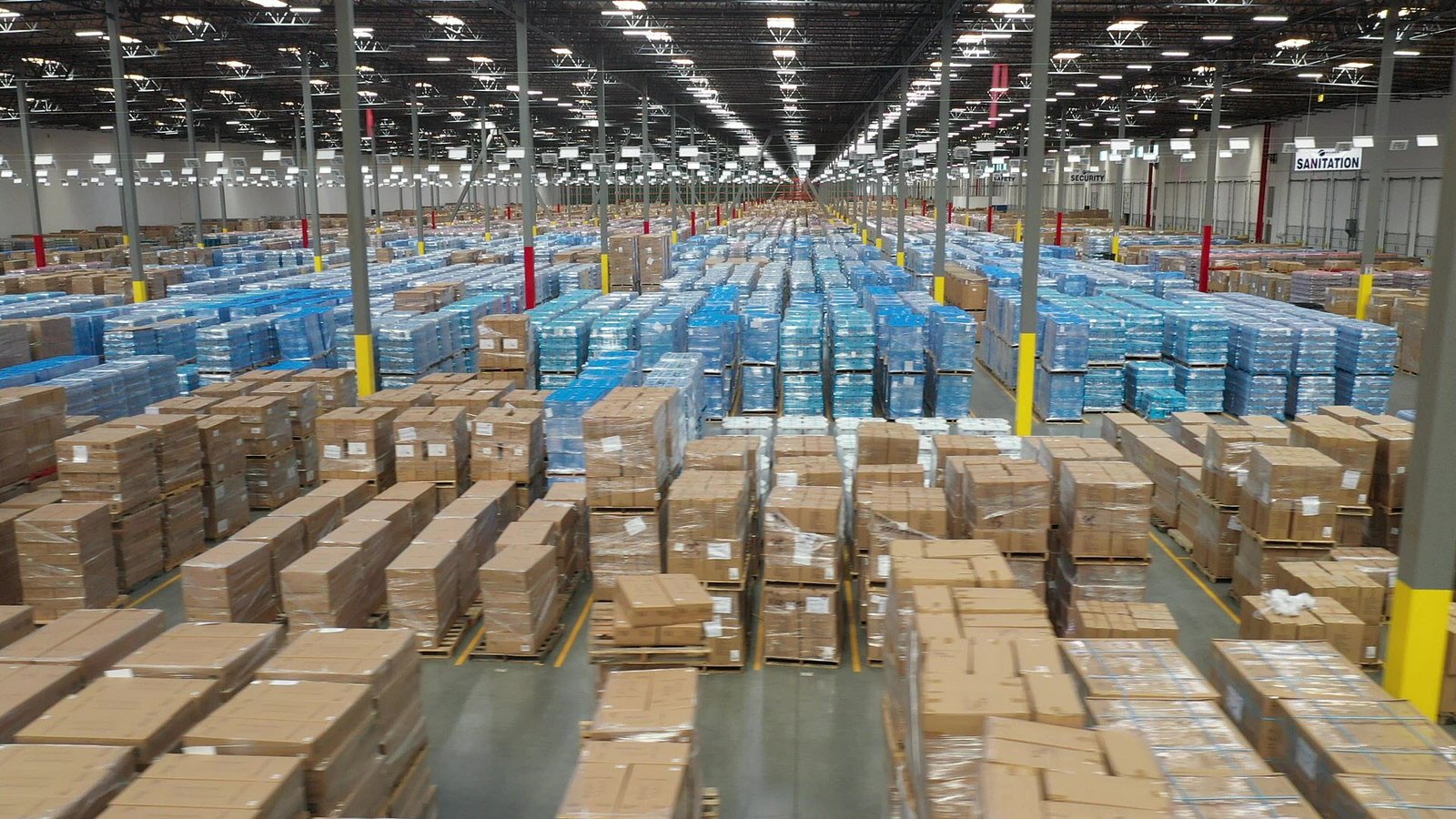
Construction for Logistics and Distribution Operators in Pueblo
General contractor for Pueblo logistics operators: warehouses, cross-docks, truck courts and rail-served yards laid out from throughput and trucks.
- Category
- Industries We Serve
- Area
- Pueblo and southern Colorado
- Next Step
- Request a Project Review
Freight leaves Pueblo on two railroads and three highways: BNSF and Union Pacific on the rails, Interstate 25 and US 85 on one shared north-south route and US 50 across the east-west line. The city sits at 4,692 feet and about 112 miles south of the state capitol. We build warehouses, cross-docks and truck yards for logistics operators who want that geography to work for them.
Distribution buildings seem simple from the road. Inside, the details decide the cost: slab flatness for racking, clear height, dock count, trailer parking and the turning radius at the gate. Get one wrong and the building works against its own operation. We ask about throughput, product and equipment first, and we draw the building from the inside out.
Our project teams handle warehouse construction, cross-dock terminals, outdoor storage yards and the paving that connects them to the road.
Docks, slabs and truck movement
Dock design starts with the trucks. Door count, apron depth, trailer parking and the way a driver enters, backs and leaves are laid out before the walls. Our truck courts and dock aprons work uses reinforced concrete sections where trailers park and turn, because asphalt rutting under landing gear is a costly maintenance habit.
Inside, slabs carry racking and forklift traffic. Flatness tolerance, joint layout and reinforcement are coordinated with the racking vendor and the material-handling plan. We do not guess about those items. Trailer queuing, guard shack placement and stormwater detention also take space, and a yard that is a few acres too small stays too small. Fire protection for high-piled storage is another one that should be decided with your insurer and the fire authority before the building is bid, not after.
Rail, airport and industrial park sites
The city of Pueblo lists the St. Charles Industrial Park as an Opportunity Zone with rail freight access. Pueblo West has a North Industrial Park and is described as a growing industrial center, with the US 50 corridor linking it to I-25. Pueblo Memorial Airport, about 5 miles from I-25 and adjacent to US 50, has 40 acres available for development with direct taxiway access. For a logistics user, those are different products: rail-served, highway-served and air-adjacent.
PuebloPlex adds more. Its current tenants include manufacturing, warehousing, distribution and rail car storage and maintenance, and it rents over 1,000 earth-covered magazines as storage. It is about 15 miles east of Pueblo. We discuss each site's tradeoffs, from soils and utilities to truck route and rail access, before you buy or lease.
Plan from the inside out
We start with a conversation about what moves through the building. Pallets per day, product types, picking method and seasonal peaks tell us more than a square footage target. Then we work out clear height, column spacing, dock position and office size from the operation, check them against the site and price the result.
Where the user is a tenant on a lease, we coordinate with the landlord's design team so the shell and the fit-out land together. Where the user is an owner, we look at expansion paths: a shell that can be extended in one direction, utilities sized for a second phase and a yard that does not box the building in. Phasing a building costs a little more up front and saves a lot later. That is our honest view, and we give you the numbers so you can disagree with it. Developers who build ahead of a tenant should see how we work with commercial real estate developers on speculative buildings.
Fast shells and long-lead items
Logistics owners usually need space quickly, and a tilt-wall or pre-engineered building can be erected fast once the site is ready. The sequence that controls the schedule is permit, site, foundations, structure, envelope, dock equipment and racking. We buy dock levelers, doors, lighting and fire protection materials early. Our warehouse building experience tells us which items hold up deliveries.
Winter in southern Colorado can slow concrete and roofing. We plan cold-weather pours and enclosures where needed, and we do not promise a date that depends on mild weather. Wind is a real factor on tall walls and large roof areas, so crane picks and panel setting get a go or no-go call each morning from the superintendent. When the shell is done, we coordinate racking and conveyor installers so that your operation can start with a clean building and a short punch list.
Buildings and users we serve
Most of the work falls into a few forms: speculative warehouses for developers, build-to-suit distribution buildings for regional operators, cross-dock terminals for carriers and outdoor yards for equipment and rail-related storage. Retail and food operators often need regional supply points too, and our retail chain page shows how we work with them. Many logistics buildings also support industry, so see our manufacturing plants page.
The rail connections extend beyond Pueblo. BNSF runs freight trains between Denver and Kansas and Texas through La Junta, 68 miles east of Pueblo on US 50. In the north, Pueblo West offers an industrial park with highway access. We make site recommendations based on what your trucks and trains need.
Tell us what moves through the building
Send your throughput, product types and site options. We will return a layout, a price range and a schedule, and we will tell you where a site helps or hurts your operation.
Questions Owners Ask
What clear height and column spacing should I choose?
It depends on your racking, handling equipment and product. Higher clear height raises building cost but adds storage per square foot of land. We run the numbers on a few options with your operations team and show the cost per pallet position.
Is concrete or asphalt better for my truck yard?
Concrete lasts longer under heavy trailer parking and turning, and costs more up front. Asphalt costs less initially and needs more maintenance. We price both for the areas where it matters, such as dock aprons and parking stalls.
How do I choose between Pueblo, Pueblo West and PuebloPlex for a distribution building?
Look at the truck route, rail access, utilities, land cost and workforce. Pueblo has rail-served industrial parks and airport land, Pueblo West sits along US 50 with a North Industrial Park, and PuebloPlex offers large acreage east of the city. We give you build cost and site work cost for each.
Can you build a facility in phases?
Yes. We design utilities, yard and structure to accept a later expansion, and build the first phase to operate on its own. We show the added first-phase cost and the saving at expansion.
What drives fire protection cost in a warehouse?
Storage height, commodity type and rack layout. High-piled storage can need in-rack sprinklers or special water supply. We coordinate with your insurer and the fire authority early, so the building is designed once.