
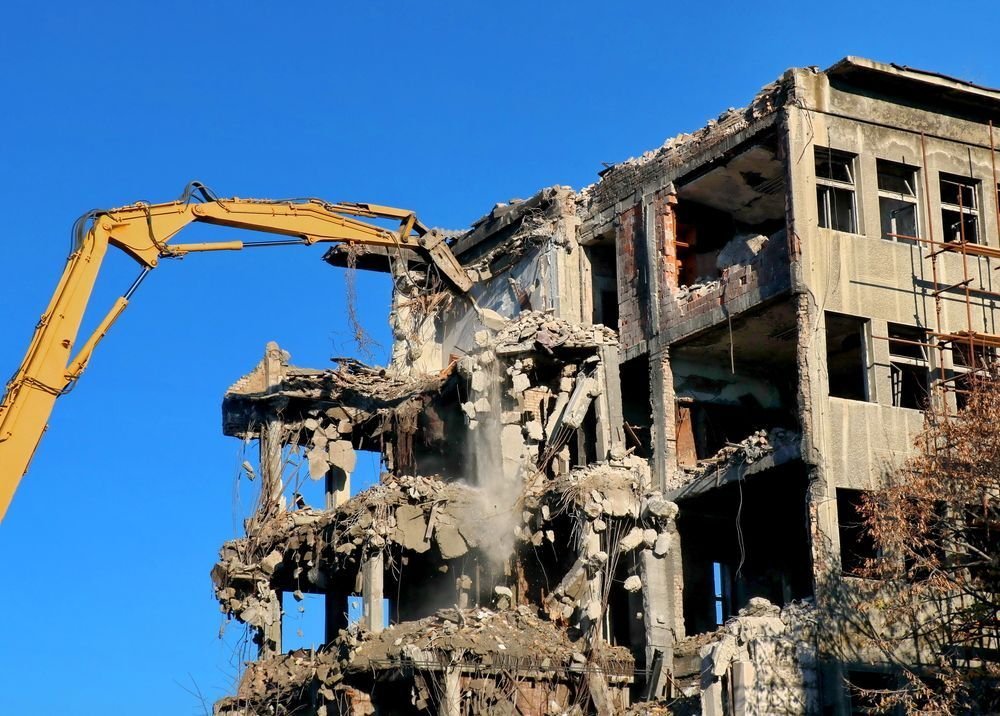
Commercial Demolition in Pueblo
Selective and full demolition of Pueblo commercial and industrial buildings, with surveys, utility shutoffs, abatement coordination and recycling records.
- Category
- General Contracting Services
- Area
- Pueblo and southern Colorado
- Next Step
- Request a Project Review
The Army decommissioned the Pueblo Chemical Depot on September 12, 2024, about fifteen months after the last munition was destroyed, and the land and buildings that remain are now part of a much bigger conversation about what comes next. Every redevelopment plan in the Pueblo area, from a steel works on the south side to a depot east of town, starts with the same question: what comes down, and what stays?
We demolish commercial and industrial buildings, interior spaces, slabs, pavement and site structures. The work can be a few walls inside a clinic or a whole warehouse down to bare ground. Either way, the order of operations is the same: find out what is in the building, isolate it from utilities, remove hazardous materials, take it apart in a planned sequence, sort and haul the debris and leave the site ready for the next owner.
Demolition is cheap to start and expensive to get wrong. A missing utility shutoff, an unexpected tank, a wall that was holding up more than it looked like or an adjacent building that suffers damage can turn a straightforward job into a long, costly one. We put time into investigation up front for that reason.
Selective, structural and site demolition
Selective demolition removes part of a building while the rest stays in use or is kept for reuse. That includes interior gut-outs, wall and ceiling removal, floor removal, cutting openings and removing mechanical systems. It demands care, since the result needs to be clean enough for the next trade to build against.
Structural demolition takes the whole building down, from roof to foundation. We use excavators with shears and hammers, saw cutting and hand work where needed. Site demolition covers pavement, curbs, slabs, footings, tanks, utilities and fences. We also handle sorting and hauling, and prepare the site for the following work, whether that is mass grading for a new building or the repaving described in parking lot construction.
Surveys, abatement and protection
Before we touch an older building, we need to know what is in it. A survey for asbestos, lead paint and other regulated materials is required before demolition, and the owner is responsible for ordering it. We help coordinate the survey, review the results and plan abatement with licensed contractors. Fluorescent lights, mercury switches, refrigerants, oils and process residues also need handling.
Utilities come next. We verify that electricity, gas, water, sewer and communications are shut off and capped by the utility, not assumed. Neighbors matter, so we protect adjacent buildings, sidewalks and streets with barriers, dust suppression and monitoring. Crews follow written plans for fall protection, equipment spacing and exclusion zones. A demolition site is a place where nobody improvises on safety.
What is coming down and what is not
The PuebloPlex master plan covers roughly 16,000 acres with more than 600 buildings plus utility and transportation systems. Not every one of those will stay. The redevelopment is aimed at industrial, storage, research and development and rail-related uses, and some structures will fit and others will not. Deciding which are worth keeping is a job for the owner and engineers, and we help by pricing both options.
In the city, older commercial buildings, closed retail boxes, former industrial yards and aging campus structures are in play. The Colorado Mental Health Hospital campus has buildings that date from additions across the late 19th century into the 1960s, which shows how many eras of construction can sit on one site. Sites near the old steel works on the south side have a long industrial history that we research before we dig.
How we manage the demolition work
We schedule and supervise most of the demolition on a typical job: equipment operation, saw cutting, coring, hand demolition, concrete breaking and site clearing. That means we control the sequence and the safety of the work. We bring in specialists for abatement, large-scale hauling, crushing and utility disconnection.
Concrete and masonry can often be crushed and reused as base material, which cuts hauling and disposal costs, and metals are sorted and recycled. We separate materials on site, document quantities and give you a record of what was recycled and what went to a landfill. If you are pursuing a green building certification, that record counts. The same project team manages the foundations of a new building after demolition clears the ground, as in our concrete foundation work.
Sequence and timing
Demolition schedules are shorter than construction schedules, but they depend on permits, utility shutoffs and abatement. Those three items often take longer than the physical demolition. We start them as early as we can and run them in parallel. We also plan haul routes and disposal sites so debris does not sit on site longer than necessary.
Weather affects demolition less than other trades, but wind, rain and cold change dust control and heavy equipment operation. We watch the forecast and adjust. If the next project depends on a cleared site by a certain date, we build that date backward from the demolition and give you an honest view of risk. When a demolition is part of a renovation or adaptive reuse, we sequence it with the rest of the project so that nothing is removed before it is safe to do so.
What demolition costs
Building size, construction type, height, access and the amount of hazardous material drive the price. A wood-frame building comes down quickly. A heavy concrete or steel structure takes longer and costs more. Basements and deep foundations add excavation and backfill. Disposal fees and distance to the landfill or recycler matter too.
Abatement is often the biggest swing item, so a survey before pricing is worth the money. We provide unit prices for unforeseen conditions such as buried tanks or extra slabs, so there is a known price if they turn up. Salvage can offset part of the cost, particularly structural steel and copper. For public sector owners with funding rules, we document every step carefully so audits go smoothly.
Know what is in the building first
Send us the address and what you plan to build next and we will lay out the survey, the sequence and a price with the unknowns listed.
Questions Owners Ask
What do we have to do before demolition can start?
Order a hazardous materials survey, arrange utility disconnects, secure a demolition permit and notify any agencies the survey requires. We help with each step and sequence them so the physical work is not waiting on paperwork.
Can you demolish part of a building while the rest stays open?
Yes. We build dust and noise barriers, shore the structure where needed and schedule noisy work for off hours. The rest of the building stays operational while the demolition area is isolated.
What happens to the debris?
We separate materials on site. Concrete and masonry can be crushed and reused, metals are recycled and the rest goes to approved disposal. We give you quantities and receipts, so you have a record of where everything went.
What if we find an underground tank or contamination?
We stop work in that area, notify the owner and bring in specialists to evaluate and remove the tank or contaminated soil according to the rules. The cost depends on what is found, which is why we carry unit prices and contingency.
Do you do demolition and rebuild on the same site?
Yes. Doing both with one contractor saves a handoff, shortens the schedule and means the people who took it down understand what is in the ground when we build back.