
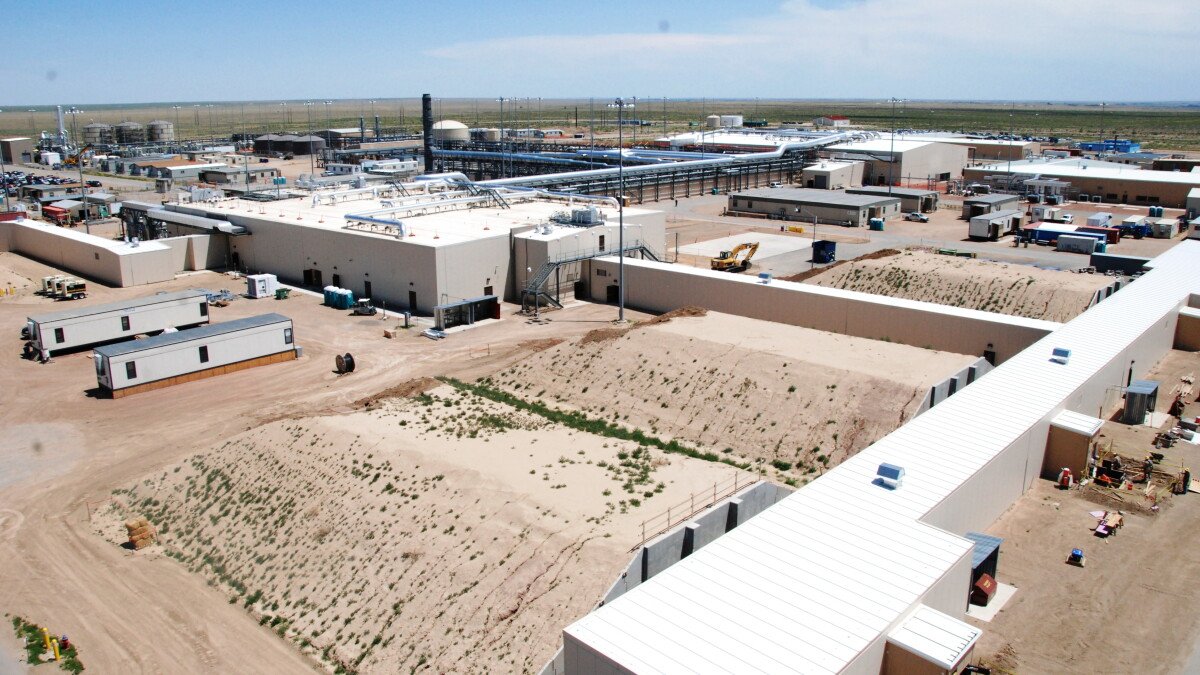
Construction on the Pueblo Chemical Depot Land
Building on former Pueblo Chemical Depot ground: records review, careful excavation plans, utilities, paving and logistics buildings east of Pueblo.
- Category
- Service Areas
- Area
- Pueblo and southern Colorado
- Next Step
- Request a Project Review
Before a shovel breaks former depot ground, the owner and the builder both need to know what the land has been through, and that is the first conversation we have on any job at the Pueblo Chemical Depot. The Pueblo Army Depot dates to 1942, when it was set up on 24,202 acres 14 miles east of Pueblo. The 1988 base closure commission kept it open because of its chemical stockpile. The depot held 2,613 tons of mustard agent in about 780,000 munitions, destruction of all munitions was completed June 22, 2023, and the Army decommissioned the depot on September 12, 2024.
That history shapes what a contractor does here. We do not assume, and we do not guess. We ask for the environmental records, the transfer documents and any restrictions that came with a parcel, and we read them before we price footings, utilities or a building. A site assessment costs far less than stopping work after a surprise.
The depot is a very large redevelopment site, with land and highway access that few parcels near Pueblo can match. We help owners and tenants turn that land into buildings in steps, and we are candid about which steps depend on paperwork rather than concrete.
Land with a documented past
Former military land comes with records: surveys of past uses, environmental studies, notes on cleanup and sometimes restrictions on what can be built or dug. The Army decommissioned the depot in September 2024, and parcels have been moving to the redevelopment authority in stages. The status of any given parcel is a question for the owner's counsel and environmental consultant, not for us, and we say so.
What we contribute is the construction side of the diligence. We review the records with the owner, mark where utilities, old foundations and former structures are likely to be, and build a plan for excavation that includes a stop-work procedure if something unexpected appears. Our selective demolition group handles removal of obsolete structures once the owner confirms what can come down.
Permits, transfers and review
A project here can involve several layers: county permits for building and grading, state and federal review where environmental conditions apply, utility approvals and the redevelopment authority's own requirements as landowner. Our permitting and entitlements work sorts these into a single list with an owner and a date for each.
The Pueblo County Building Division lists the 2021 International Code Council building codes and the 2023 National Electrical Code as enforced, with Title 15 amendments. We confirm with the county which office handles a given parcel, since the answer determines whose plan review you wait for.
How we sequence a depot job
Diligence comes first and includes records, a site walk and a conversation about what the owner expects to find. Then we prepare a budget that includes a stated contingency for unknown ground conditions. If the owner prefers, we split the work into an investigation phase and a construction phase, so the first dollars buy information instead of building.
With a defined scope, we move to construction management at risk or a fixed-price contract, depending on how well known the conditions are. Unknown conditions favor an open-book approach. Known conditions allow a firm price. Either way, you see the same cost breakdown, and we update it every month while the job is under way.
What gets built
Typical work on former depot land includes access roads, utility extensions, pads for new buildings, storage and logistics buildings and the reuse of existing structures. A logistics or fulfillment building benefits from the site's rail and highway access, and a US 50 interchange serves the depot at about mile 329.1, east of the Pueblo Memorial Airport interchange.
Heavy paving is a large part of the budget, because trucks and rail-adjacent yards need thick sections. We price pavement by use, with different sections for car parking and truck lanes. Utility service is another major line; long runs of pipe and power cable are expensive, and we show them clearly.
What drives cost on this land
Three items move the price more than the building does: the cost of diligence, the cost of getting utilities to the parcel and the cost of unknown ground conditions. We separate each one in the budget so an owner can see what is firm. Diligence costs are modest and certain. Utility extensions are large and depend on distance. Unknown conditions are carried as a contingency that the owner controls and sees spent.
Public owners and agencies that take land from a closed federal installation deal with extra approvals and reporting. If that describes you, our page for government and public sector owners covers how we handle procurement and documentation. Private tenants sign leases with the redevelopment authority and build to that lease, and we read it with you so the construction matches its terms.
Safety on former military ground
Crews receive a site-specific briefing before they start, including what to do if they find an unfamiliar object or soil that looks or smells wrong. We stop work, secure the area and call the owner and the right authority. Nobody tries to handle it themselves.
The Pueblo Chemical Agent-Destruction Pilot Plant began construction in 2012 and operations in September 2016, had about 1,500 employees in 2023 and has spent more than $500 million with Colorado companies. That plant shows the safety culture the site has been run under, and we expect to meet that standard, not only the legal minimum. Neighboring industrial ground is described on our PuebloPlex page, and the airfield next door on our airport industrial park page.
Looking at a parcel on the depot
Send us the parcel and the records you have. We will review them with you and plan the construction around what they say.
Questions Owners Ask
Can we build on land that was part of the depot?
In many cases yes, but each parcel has its own history and conditions. The owner's counsel and environmental consultant decide what is allowed and what must be cleaned or restricted. We review the records with you and plan construction around them.
What if we find something unexpected in the ground?
We stop work, secure the area and notify the owner and the proper authority. Our contracts include a stop-work procedure and a contingency for unknown conditions, so nobody is pushed to keep digging against the clock.
Is it cheaper to reuse buildings here or build new?
It depends on the building. Structure, roof, floor, utilities and hazardous materials all matter. We survey first, then compare repair against new construction on the same size and use.
How long does diligence take before we can start building?
It varies with the parcel and the quality of its records. Reviewing documents and walking the site takes days, while any testing the owner's consultant recommends adds weeks. We ask for the records at the first meeting and schedule the site walk right away, so the budget and the calendar rest on real information.
Who do we talk to about permits?
It depends on the parcel. County building and grading permits are common, with utility approvals and the landowner's own review on top. We build a list of every approval needed and track each one.