
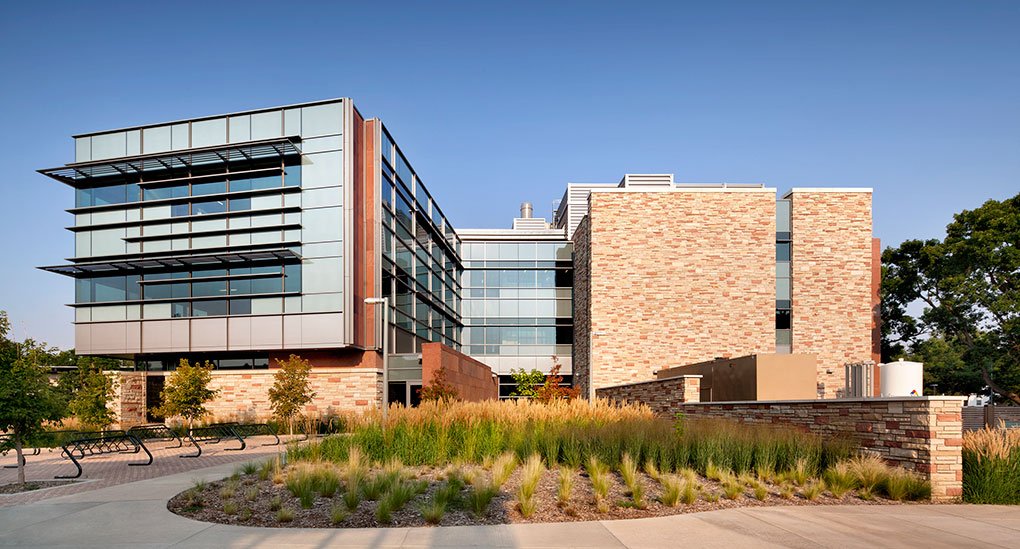
Construction at the Transportation Technology Center
Shops, instrument buildings and support space beside rail test tracks northeast of Pueblo: federal site access, heavy floors and schedules around testing.
- Category
- Service Areas
- Area
- Pueblo and southern Colorado
- Next Step
- Request a Project Review
A 13.5 mile test track and a 9.1 mile transit test track tell a builder most of what matters about the Transportation Technology Center: this is a place where buildings serve moving equipment, and the work happens around test schedules. The center lies northeast of Pueblo, just north of the Pueblo Chemical Depot, on a site described as 30,000 acres with approximately 48 miles of railroad track. We build the shops, instrument buildings, storage and support space that sit beside track like that, and we plan jobs so they do not interfere with testing.
The Federal Railroad Administration owns the center, which was dedicated May 19, 1971. Its operator, MxV Rail, was renamed in March 2022, and ENSCO has managed operations since October 2022. Ownership by a federal agency and management by an operating contractor mean a builder deals with two layers of rules: the owner's requirements and the operator's day-to-day site procedures. We read both before we start a schedule.
Distance matters out here. The site is roughly 25 miles northeast of downtown Pueblo, and every delivery, every inspection and every crew change reflects it. We plan fewer, fuller trips, and we stage materials carefully.
A site built around rail research
The center's work is rail: tracks, vehicles, loads and the infrastructure that supports them. That creates demand for maintenance shops, instrumentation and data buildings, equipment storage, rail-served pads and offices for the staff and visitors who come to test.
Rail work reaches well beyond this site. The PuebloPlex redevelopment lists tenants in rail car storage and maintenance, and the rail mill on the south side of Pueblo rolls rails up to 480 feet long. Together these show that the Pueblo area has a working rail economy, and that buildings which support it have their own standards for loads and clearances.
Buildings that sit beside track
The most common request is a flex or light industrial building: a shop bay with overhead doors, an office, a storage area and some yard. For rail work, door height and width are tied to the equipment, and floor design follows what will roll across it.
Other buildings include data and control rooms with stable power and cooling, covered storage for sensitive instruments and open pads for heavy test equipment. Each has a different structure, and we sort them at the start so the foundations suit the loads.
Instrument and control buildings are small but fussy. They need clean power, cooling that does not quit, cable paths that stay dry and floors that do not shake. We run the electrical and mechanical design review with the owner's engineers early, because changing a cable tray after the walls are up costs far more than moving a line on a drawing. Fire protection and access control are reviewed at the same time so nothing is left to the final week.
Concrete, foundations and site work
Track-side buildings put weight on the ground. Heavy equipment, vibration from passing loads and large floor areas call for good subgrade work. We schedule and inspect grading, compaction and slab placement, and we coordinate with a geotechnical engineer on the soil recommendations. Where tall or heavy equipment needs deep support, deep drilled pier foundations are an option the engineer may specify.
We also build the access roads, drainage and utility runs that connect a new building to the rest of the site. On 30,000 acres, those connections can be longer than the building, and we price them separately so the owner sees the real total.
Working near live tracks
Test operations run on a schedule that we do not control. Before work begins near a track, we get the operator's rules for track access, work windows and flagging. Crews learn the site's signals and keep equipment and materials clear of the right-of-way.
Federal ownership adds site access screening, which can take time for new workers. We submit names early and keep crews stable so that people already cleared are the ones working. Substituting a new worker at the last minute can cost a day.
Weather matters on open ground. Wind affects crane lifts and roof installation, summer heat affects concrete and winter cold affects everything else. We set wind limits for lifts before the first pick, pour in the cooler part of the day in summer and use blankets and heat when temperatures drop. Every one of those measures appears in the schedule and the budget instead of being absorbed into the contingency.
Where cost shows up on a remote federal site
Travel time, mobilization and access rules affect the budget on any remote site, and they are more visible here. A crew traveling 25 miles loses time each day at the gate and on the road, so we plan longer shifts and fewer starts. Utility extensions and long access roads also account for a larger share of the budget than they do in town.
We prepare estimates for public and federal-adjacent owners in the format they require, with a schedule of values and clear allowances. The page for government and public sector owners explains how we handle submittals, payment applications and records.
Fitting construction around testing
The best schedule gets noisy, dusty or vehicle-heavy work done when testing is quiet. We ask the operator for the test calendar and plan our work windows around it. If a test program changes, we adjust the schedule instead of arguing over it.
Close-out matters as much as start-up. We hand over a building with commissioned systems, documentation and training, using the same process described under commissioning and closeout. A neighboring parcel to the south is covered on our Pueblo Chemical Depot page.
Planning work at the test center
Tell us what the building must hold and when testing allows work. We will plan access and give you a clear price.
Questions Owners Ask
Who owns the Transportation Technology Center?
The Federal Railroad Administration owns it, and an operating contractor manages it. That means a builder follows both the owner's requirements and the operator's site procedures. We obtain both before we price the work.
How do you work near active test tracks?
We get the operator's rules for access, work windows and flagging, and we keep people, equipment and materials clear of the right-of-way. Our schedule is built around the test calendar when one is available.
Does the remote location raise the price?
Yes, to some degree. Travel, site access and long utility runs add time and cost. We show those items separately, and on larger projects they are a small share of the total.
How do you handle site access for new workers?
Federal ownership means workers may need screening before they enter, so we submit names early and keep the crew stable. We also bring tools, materials and deliveries through the checkpoints on a planned schedule, which keeps a single late truck from holding up a crew for the day.
Can you build shops with heavy equipment loads?
Yes. We design the floor, foundations and structure around the equipment, with a geotechnical report guiding the subgrade. We ask for equipment weights and dimensions at the start.