
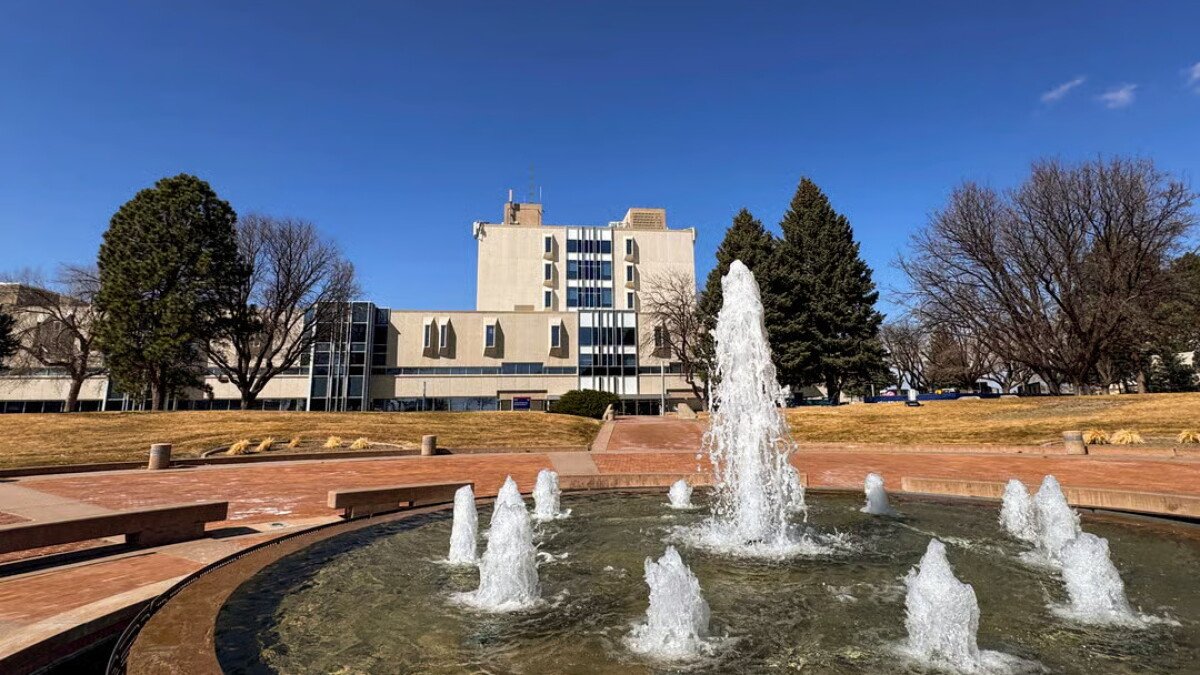
Campus Renovation and Student Housing Construction at CSU Pueblo
General contractor for residence halls, labs and campus renovations around CSU Pueblo and Belmont, scheduled around the semester and priced plainly.
- Category
- Service Areas
- Area
- Pueblo and southern Colorado
- Next Step
- Request a Project Review
Work on a live campus gets planned around the semester, not around the contractor. That is how we approach building near CSU Pueblo in the Belmont area of northern Pueblo, where residence halls, labs, a library and student services all have to keep running while crews work next to them. We price the job with that in mind: quiet hours, delivery routes that stay off pedestrian paths, and turnover dates that land before students do.
The campus covers about 275 acres, down from the 850 acres originally donated, so there is open ground for new buildings and a long list of older ones that call for renovation instead. The record shows the mix. The university added a 1.2 megawatt solar array and three residence halls in 2011, put a LEED Platinum renovation into its Library and Academic Resources Center, and reopened a renovated Occhiato Student Center in January 2018. Housing, energy and interior renovation have all been on the capital list, and we build all three.
Scale matters to a buyer here. Fall 2024 enrollment was 3,730, and the city's annual financial report puts CSU Pueblo at 1,500 employees, fourth among local employers. That is a steady owner with ongoing needs, and the education institutions we work for tend to value a contractor who answers the phone in July as well as in May.
Building around the academic calendar
Summer is the window. Most occupied-building work on a campus has to finish between spring commencement and fall move-in, which gives roughly twelve weeks to demolish, rough in, inspect and finish. We build the schedule backward from the move-in date, then check every long-lead item against it. Doors, switchgear, air handlers and specialty finishes get ordered before the drawings are final if that is what the calendar demands, and our long-lead procurement process puts those dates in front of you early.
Some work cannot wait for summer. Exterior envelope, site utilities and new construction on open ground run through the school year, and we keep that work behind fencing with dedicated haul routes. For renovation inside buildings that stay open, we use phased construction on occupied sites: temporary walls, dust control, a fixed notice period before any shutdown of power, water or fire alarm, and a single point of contact for facilities staff.
What campus work usually includes
Most calls start with one of four things: a residence hall that needs updating, an academic building whose labs or classrooms no longer match the program, a mechanical system at the end of its life, or a new building on available ground. The residence halls that went up in 2011 are now old enough to need interior and systems work, and the older academic buildings need envelope and accessibility upgrades before anything else.
We handle the whole range, from a single classroom gut to a new wing. Renovation work follows the sequence of survey, abatement where needed, selective demolition, structural repairs, rough-in, close-in and finishes. New construction adds site work, foundations and a framed or steel structure. If you are weighing renovation against replacement, our renovation and adaptive reuse team will price both so the decision rests on numbers, not on a guess.
Housing, classrooms and student services
Residence halls are the most schedule-sensitive work on a campus because beds have a hard opening date. Our student housing construction work is built around that date, with repeating unit layouts, prefabricated bathroom pods where they save time, and early coordination on furniture and move-in logistics. Dining and student centers, like the renovated Occhiato Student Center, are different: they are public, busy and full of finishes that show wear.
Academic buildings bring their own demands. Labs need ventilation, exhaust and casework coordinated well before rough-in. Libraries need quiet and stable humidity. Our education building experience covers each of those, and we bring the same discipline to athletic and support buildings, where the main questions are clear spans, durable floors and low maintenance. If your program includes off-campus housing or retail, we also build in downtown's Union Avenue district and along the Pueblo Mall corridor.
Energy goals and who reviews the plans
The LEED Platinum library renovation shows that sustainability goals are part of how this campus builds. The solar array points the same way. When the owner sets an energy or certification target, we plan it from the start: envelope detailing, commissioning documents, product submittals tracked to credit requirements, and a closeout package that supports certification. Colorado law also requires any county or city that updates its building code after July 1, 2023 to pair it with an energy code at least as strict as the 2021 IECC, so energy performance is rising on every job.
Ask early who the building authority is. A state institution can follow its own design standards and review path, which may differ from city plan review, and the answer changes both the schedule and the inspection sequence. We confirm the review route in preconstruction and carry the right fees, submittals and inspections in the plan. Our commissioning and closeout work then closes out systems testing and documentation so the facilities staff inherit a building they can run.
Where campus budgets move
Three things move a campus budget more than anything else: what is behind the walls, how much work has to happen at night or in a short summer window, and how well the scope is defined at bid. Older buildings can hide asbestos-containing materials, deteriorated plumbing and electrical runs that do not match the drawings. We recommend a survey and some exploratory demolition before the number is final, and we carry a clear allowance for what cannot be seen.
Summer compression costs money, too. Doing twelve weeks of work in eight takes extra crews, premium time and early material buys. We show those costs as separate lines so you can decide whether an extra week of schedule is worth the savings. Where several buildings are on the same campus plan, we also look at bundling them so one mobilization, one set of temporary protection and one team serve more than one project.
Planning a campus project?
Send us the program and the date you need it open. We will tell you what the summer window allows and what it costs.
Questions Owners Ask
Can you work in a residence hall during the school year?
Yes, with limits. Exterior work, corridors on vacant floors and shared spaces can proceed in term if we control noise and dust and keep students away from the work area. Anything that takes a floor or wing out of service is better saved for summer. We map each area in the schedule so you see what is open and what is not, week by week.
How do you protect labs and library collections from dust and vibration?
We build sealed enclosures with negative air, use floor protection on the routes in and out, and keep demolition away from sensitive rooms until the end of the shift or the break. Vibration-sensitive equipment and collections get a monitoring plan before work starts. If a lab cannot tolerate any disruption, we plan the work for a break when it can be shut down.
Should we renovate an older residence hall or build new?
It comes down to structure, layout and mechanical systems. If the frame is sound and the room mix still works, renovation is usually cheaper and quicker. If the layout is the problem or the systems need to be replaced everywhere, new construction on open ground can be the better value. We price both paths to the same level of detail so the comparison is fair.
What does a solar or energy project add to the schedule?
Rooftop or ground-mounted solar adds structural review, electrical interconnection and utility coordination. Utility lead times often decide the date more than the installation does. We start those requests in preconstruction and track them in the schedule. If the array shares a site with other construction, we sequence it so it does not block crane or truck access.
How early should we bring a contractor into a campus project?
As early as the program is clear. Early involvement lets us flag summer-window risks, check long-lead items and price alternatives while the design can still change. A project with a firm opening date benefits most. Even a short preconstruction phase tends to save more than it costs.