
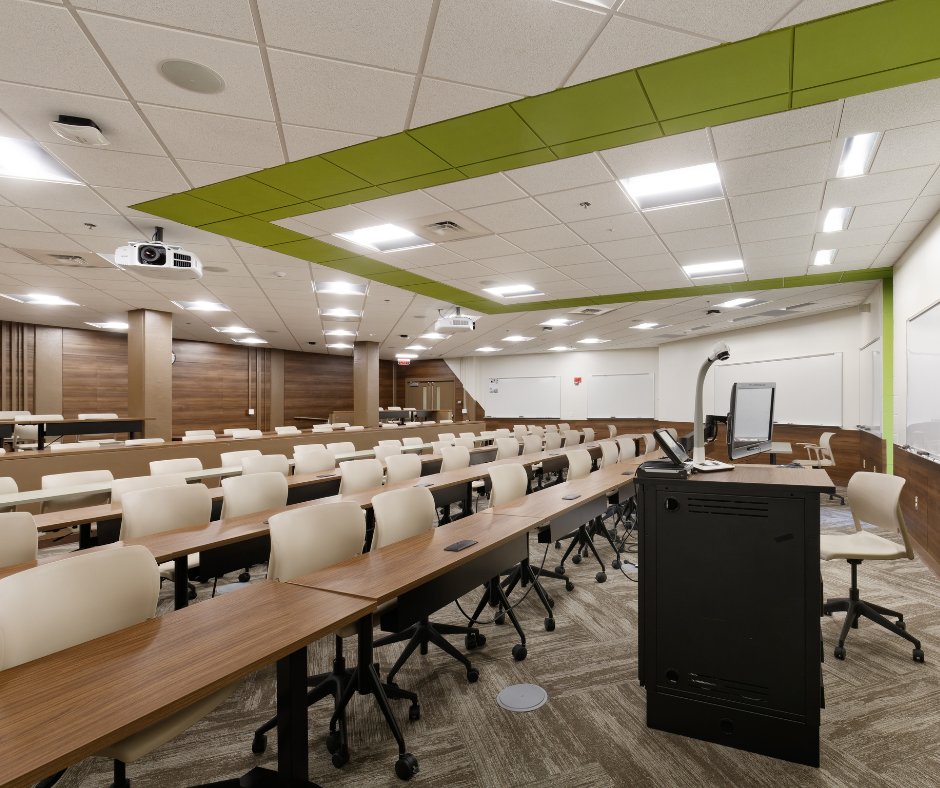
Construction for Education Institutions in Pueblo
General contractor for Pueblo schools and colleges: summer-window renovations, campus housing, plant upgrades and public-funded builds that open on time.
- Category
- Industries We Serve
- Area
- Pueblo and southern Colorado
- Next Step
- Request a Project Review
Summer break is the one hard deadline in education construction. Students leave in May and come back in August or September, and a classroom wing, a roof or a boiler plant has to be finished and signed off between those dates. We build and renovate for colleges, school districts and training programs in Pueblo and the Arkansas Valley, and we plan every job from the first day of class backward.
Colorado State University Pueblo is the largest local example. Fall 2024 enrollment was 3,730, including 3,228 undergraduates, with 372 faculty, on a campus of about 275 acres in the Belmont area of northern Pueblo. A campus like that never stops needing work. The city's annual financial report lists CSU Pueblo at 1,500 employees, fourth among local employers, so the buildings serve a lot of people: housing, labs, mechanical plants, accessibility upgrades and renovation of older academic space. Smaller institutions and rural school buildings have the same needs on tighter budgets.
We deliver education facility construction with a schedule that respects the academic calendar, a budget that respects voters and boards, and a site plan that respects children.
Working from the first day of class backward
A summer project gets about twelve weeks, and the first four are lost if materials are not ordered by spring. We start procurement of roofing, windows, switchgear, flooring and mechanical equipment as early as design and board approvals allow. Then we sequence demolition, structure, rough-in and finishes so rooms can be turned over in zones, giving custodians and staff time to clean and move in before opening day.
During the school year we limit work near occupied space to hours when students are not there. Deliveries avoid drop-off and pickup times. Noisy work waits for testing breaks if the building administrator asks. We treat the principal's calendar as a construction document.
Classrooms, housing and mechanical plants
The work ranges widely. Campus housing is one category: CSU Pueblo added a 1.2 megawatt solar array and three residence halls in 2011, and our student housing construction experience covers framing, concrete and mechanical systems for similar buildings. A second category is academic renovation. The campus also completed a LEED Platinum renovation of its library and academic resources center, and a renovated Occhiato Student Center opened in January 2018.
Our CSU Pueblo page goes into the campus in more detail, and the school building type page covers K-12 work. Third is the plant: boilers, chillers, roofs, windows and electrical service. Those projects rarely appear in news, and they decide whether a building works. We price them with the same detail as a new classroom, because a failed boiler in January is a bigger problem than a late paint color.
Plan review, public funds and inspection
Public education work follows public procurement rules, and your district or board counsel will advise on the process. Sealed bids, qualifications-based selection, CM at risk and design-build are all possible, depending on the owner. We can work under any of them and we explain how our fees, general conditions and subcontract buyout are shown in each.
On the permit side, the Pueblo Regional Building Department lists the 2021 I-codes and the 2023 National Electrical Code as currently in effect, and Pueblo County's building division enforces the 2021 ICC codes with local amendments. Inspections, fire marshal approvals and accessibility review are scheduled so that a certificate of occupancy is in hand before the first bell. State energy law (HB22-1362) also affects design for any building where the local government updated its code after July 1, 2023.
Budgets set by boards and bonds
School budgets are public and tight. Voter-approved funds, grants and campus reserves each come with rules about how and when they can be spent. We build estimates that line up with those funding sources, separating items that can be financed from items that must be paid from operations.
The biggest cost levers are building shape, mechanical system choice, roofing and the amount of renovation hidden in older buildings. We lay out options with numbers: a simpler classroom wing, a different roofing system, a heating plant that can be serviced locally. Where a district or college chooses to phase a project over two summers, we show the extra cost of mobilizing twice against the benefit of spending less in one year. The choice belongs to the board.
Keeping children, staff and buildings safe
School sites need controlled access, fencing, clear routes and background-screened crews where the owner requires it. We follow the district's rules for badges, parking and contact with students, and we train every worker on those rules. Deliveries are scheduled to avoid pedestrian paths.
Regional campuses extend beyond Pueblo. CSU Pueblo has a satellite campus in Walsenburg, and Trinidad State College serves Trinidad. See our Trinidad page for that region. For related owners, we also work with health systems that train students and with government and public sector clients who share the same procurement rules. Housing developers near campuses should see multifamily developers.
Give us the calendar and we will build to it
Tell us the building, the funding source and the date classes start. We will return a scope, a budget range and a schedule that works back from that opening day.
Questions Owners Ask
How do you finish a summer project when materials are late?
We resequence the work. Rooms without long-lead items go first, and the rest is arranged so the building can open in zones. We tell the owner the status every week so there is time to arrange temporary space. Early procurement is the best protection, so we buy as soon as submittals are approved.
Can you build near an occupied school?
Yes. We build fenced work zones, control deliveries, and limit noisy work to agreed hours. Crews follow the district's rules for access and conduct, and the site is secured every day.
Do you take small projects like a roof or a boiler?
Yes. Roofs, windows, boilers and electrical service upgrades are some of the most important education projects, and we price them carefully. They often go to bid on a short timeline, so we stay ready.
What does a campus housing project need to start?
A program (beds, unit types, amenities), a site, a budget and a date students must move in. We then test the budget in preconstruction and look at systems that repeat. Move-in dates are firm, so we plan the schedule with a cushion.
How do you compare bids that include different alternates?
We price alternates as separate add and deduct lines, with the same quantities and unit assumptions as the base bid. That lets a board compare apples to apples and decide how far its funds will reach. If an alternate affects the schedule, we show the days as well as the dollars.
What happens to the schedule if the board approves funds late?
Funding delays are common, and the summer window does not move. We help the owner decide what to buy ahead, what to fabricate off site and what to move to a second summer. A project that loses its window is better split cleanly than rushed, and we say so.