
Stormwater and Drainage Construction in Pueblo
Stormwater, detention and storm sewer construction for Pueblo commercial sites, built with erosion control, tested pipe and as-built records at closeout.
- Category
- General Contracting Services
- Area
- Pueblo and southern Colorado
- Next Step
- Request a Project Review
Water as deep as 18 feet ran through downtown Pueblo in the 1921 flood, and the city rerouted the Arkansas River afterward. Nobody here needs to be told what drainage is for. When we build a site in this metro, we start with where the water comes from and where it is allowed to go, and we draw the building around that answer instead of the other way round.
Stormwater work on a commercial job is more than a few inlets and a pipe. It is the grading that sends runoff away from the slab, the detention that holds a storm long enough to meet the release rate, the outlet structure that has to actually work in a downpour, and the stabilization that keeps the whole system from silting up before you open. We build it as one connected system and test it before we call it done.
Owners usually come to us after the civil engineer has a drainage report in hand, or just before. Either is fine. We read the report for what it asks us to build, check it against the grading plan, and tell you early if the two do not agree. Catching that on paper costs far less than catching it with a backhoe in the ground.
Drainage review and the permits behind it
Stormwater plans in the Pueblo metro go through the local jurisdiction as part of the site submittal. The Pueblo Regional Building Department lists the 2021 International Building Code and its companion I-codes as currently in effect, and the Colorado Plumbing Code on the 2021 IPC. Roof drains, area drains and anything that ties into a building fall under those plumbing and building provisions, while the site drainage design follows the civil review.
Where a project disturbs enough ground, it also needs erosion and sediment controls in place before work starts. We prepare the control plan with the civil engineer, install the perimeter measures first and keep a log of inspections after storms. Pueblo West is unincorporated and governed by Pueblo County, so a site there runs a different review path than one inside the city limits. We confirm which authority has the pen before we schedule underground work.
Creeks, river bottoms and flat industrial ground
State Highway 47 crosses Fountain Creek on the north side of Pueblo, which is a reminder that the metro sits where creeks and the Arkansas River gather runoff from a wide area. Pueblo Dam, a buttress concrete dam 250 feet tall built from 1970 to 1975, holds the upstream reservoir, and the flood history downtown is the reason owners and lenders look hard at drainage and floodplain maps before they commit to a parcel.
Flat industrial ground makes this a design question as much as a construction one. Large roofs and large paved yards shed a lot of water in a short time, and a detention pond has to be sized and placed to handle it. We have to know early whether the site drains by gravity to an existing channel, needs a pond, or has to tie into a storm sewer that is already close to capacity. That answer can move the building footprint.
How we build the system
We lay out storm pipe and structures from the outlet backward, because the downstream invert controls everything above it. Pipe goes in with the bedding the specification calls for, structures are set to grade, and we check inverts with the survey crew before backfill. Compaction around pipe is where many systems fail later, so we test it and keep the records.
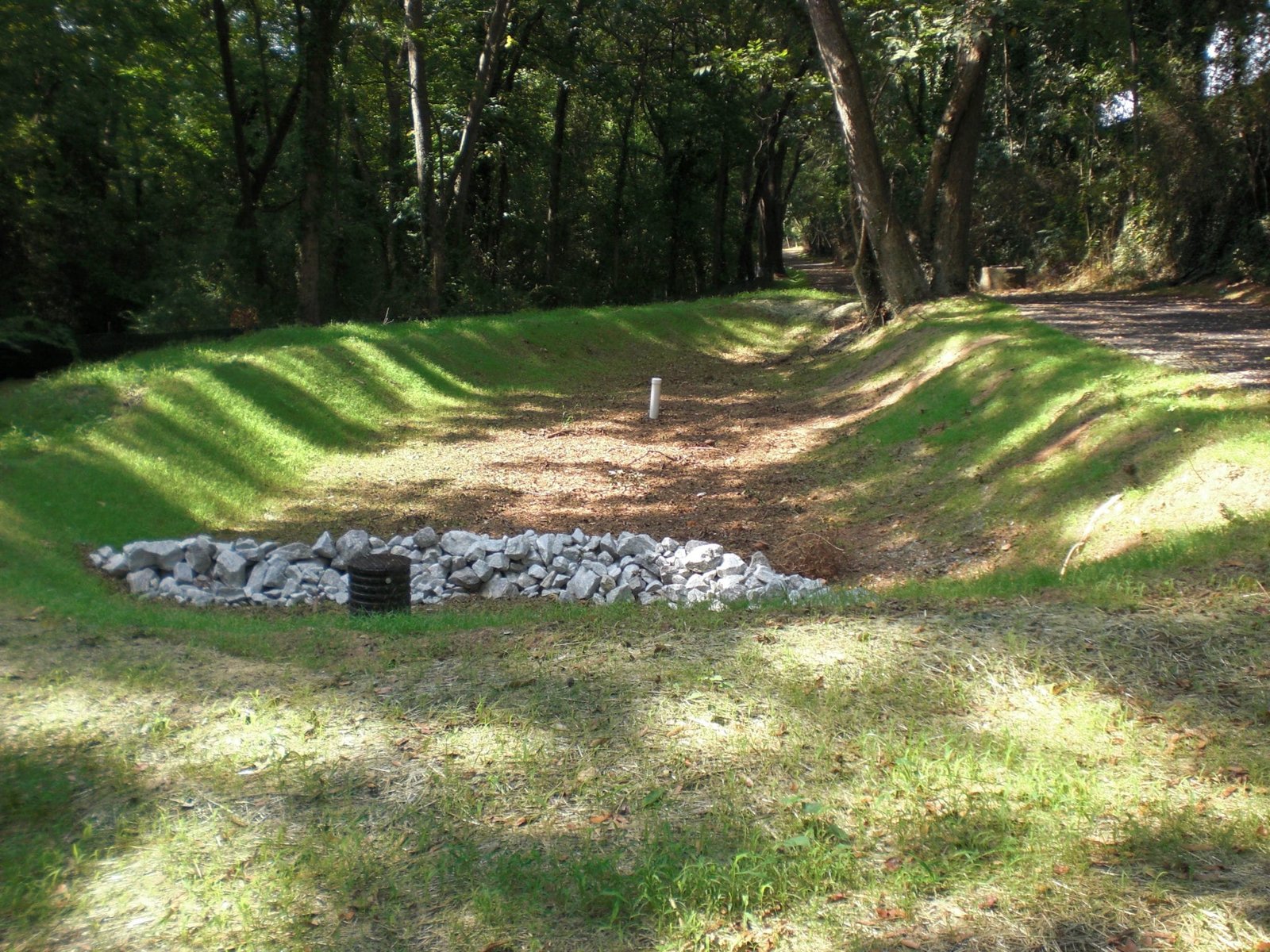
Detention basins get finished with the outlet works, emergency spillway and stabilization the plans require, not left raw. We seed or armor slopes, and we protect the basin from construction runoff until the rest of the site is stable. On sites with an existing channel, we plan the tie-in to avoid working in flowing water. Where a pour of foundations or a truck court is coming, we put the drainage in first so the paving crew works to finished inlets, not temporary ones.
Trenches, tie-ins and live water
Deep storm pipe means deep trenches, and trench work is where people get hurt on commercial sites. We shore or slope every excavation to the standard the depth requires, keep spoil back from the edge, and put a competent person on each open trench. Utility locates are done before digging and repeated when a new area opens up.
Tie-ins to live storm sewers or open channels add another layer. We plan them for dry periods when we can, protect against high flow, and keep pumps on site for the days we cannot avoid water. On an occupied property, we also barricade open structures and plate trenches that cross drive lanes so tenants and delivery trucks can keep moving. We do not leave a hole open overnight unless we have to, and when we have to, it is fenced and lit.
Where drainage ties into the rest of the job
Drainage touches almost every other scope on a commercial site. It sets the subgrade slopes for parking lot construction, decides where the dock apron drains, and often dictates how high the building pad has to sit. For a hospital or a school, it also has to coordinate with utility corridors and fire lanes.
Healthcare, education and public owners tend to ask the most questions about drainage because they carry the long-term maintenance. If you are one of them, our work with public sector owners includes handing over as-built drawings, outlet details and a maintenance note for each basin. That small package keeps the next facility manager from guessing where the pipe goes.
What pushes drainage cost up
Pipe diameter, depth and length set the base cost. Rock excavation, dewatering, long outfalls to a distant channel and off-site easements add to it. A detention pond that eats a corner of the lot also takes buildable land, which is a cost the pro forma should count. Structures such as manholes, inlets and outlet boxes add up faster than most owners expect.
The most useful thing you can do to hold the number is to settle the drainage concept before the site layout is final. Moving a pond or flipping a pad elevation after the civil set is stamped means redesign and rebidding. We price drainage as its own package with quantities listed, so you can compare it line by line and see where value engineering helps and where it only moves the cost to a later phase.
Talk drainage before the site plan is final
Share the drainage report and the grading plan and we will tell you what the system will cost and where the risks are. A quick conversation early beats a redesign later.
Questions Owners Ask
Do we need a detention pond for a new commercial building in the Pueblo area?
Often yes, but it depends on the site, the size of the impervious area and where the water goes. The civil engineer sizes it from the drainage report and the local review sets the release rate. We build to that design. If you are still choosing a parcel, tell us early and we will help you ask the right questions about outfalls and floodplain.
How does stormwater work affect the construction schedule?
Underground drainage has to go in before paving, slabs on grade near the structures and final site grading, so it sits on the critical path for most projects. A basin or outfall that needs a separate review can also add time. We sequence it right after mass grading and keep the crew moving so paving is not waiting on us.
Who is responsible for erosion control during construction?
We are, as the general contractor on site. We install the controls on the approved plan, inspect them on a regular schedule and after storms, and fix what fails. If the owner has a separate stormwater consultant, we coordinate with them so the log and the field conditions match.
Can you fix a drainage problem on an existing site while it is operating?
Yes, with planning. We stage the work around deliveries and customer traffic, use temporary pumping if needed and keep access open. The first step is figuring out why water is collecting, which is sometimes a failed pipe and sometimes just a grade that settled. We tell you the cause before we price the repair.
What should we ask for in the closeout documents?
Ask for as-built drawings showing pipe inverts and structure locations, outlet details, test records for compaction and any pipe inspection, and a written maintenance note. We prepare that package as part of closeout so the next owner or facility manager has what they need.