
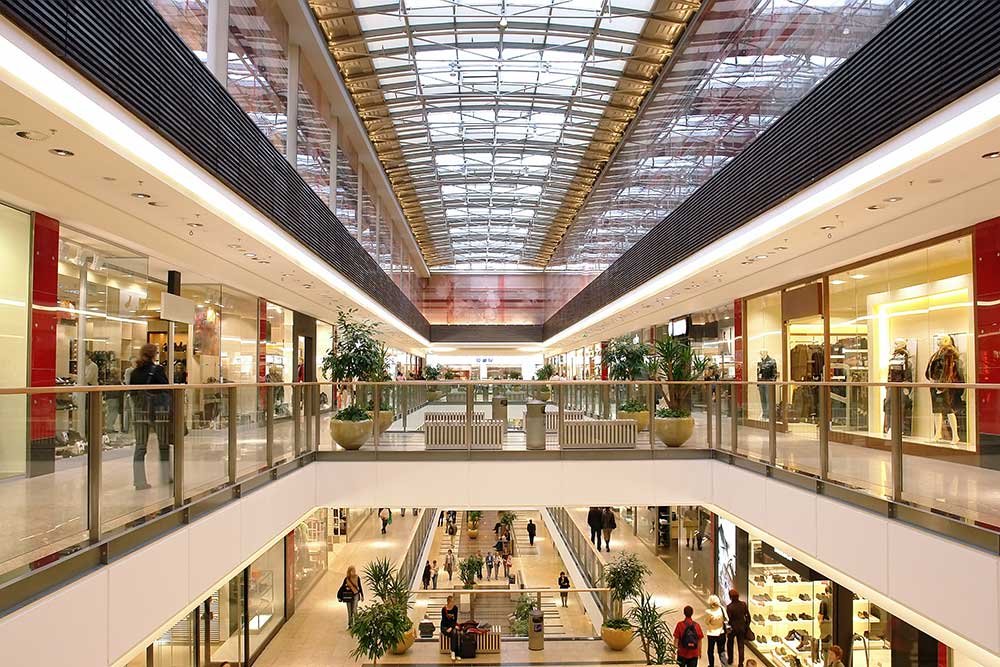
Retail Shopping Center Construction in Pueblo
Retail shopping center construction in Pueblo: pad buildings, big-box backfill, strip centers and tenant fit-outs near I-25, SH 47 and the Pueblo Mall.
- Category
- Building Types
- Area
- Pueblo and southern Colorado
- Next Step
- Request a Project Review
Most retail construction in Pueblo right now is not a new center at all. It is a tenant leaving a big box, a department store going dark or a trampoline park taking over a former sporting goods store, and the contractor's job is to turn an old shell into a new storefront without gutting a neighbor's lease. We do that work, and we also build pad sites, small strip centers and new large-format boxes when an owner has land and a tenant.
Pueblo Mall, at 3429 Dillon Drive, opened in 1976 and covers 575,000 square feet on one floor. Altitude Trampoline Park opened in the former Sports Authority space in 2019, the same year Sears closed, and Jo-Ann Fabrics announced in February 2025 that it would close its mall location. That is the normal cycle for a mature center: space turns over, and each turn is a construction job with its own demolition, utility and code questions.
Owners come to us for three kinds of project: ground-up pad buildings for restaurants, banks and quick-service tenants, tenant fit-outs inside existing space, and bigger redevelopment plans that split a large box into several smaller ones. Our retail shopping center construction page describes the full process, and this page covers what is different in the Pueblo market.
Where retail concentrates in Pueblo
Retail in Pueblo follows the interchanges. State Highway 47 begins at a single-point urban interchange with I-25 exit 101, US 50, US 85 and US 87 in northern Pueblo, crosses Union Pacific tracks and Pueblo Mall Drive, and has an eastbound ramp to Mel Harmon Drive serving the mall. I-25 exit 104 serves Dillon Drive and Drew Dix Parkway on the north side of town. Those two exits explain a lot of where tenants want to be, and our Pueblo Mall corridor page goes deeper on that submarket.
The SH 47 corridor is a 4.6 mile loop off US 50, a six-lane divided road east of exit 101, with diamond interchanges at Jerry Murphy Road and Troy Avenue, and it ends at an interchange with US 50 and SH 96 that also reaches Pueblo Memorial Airport. Properties along it get highway visibility, and developers should expect access spacing and turning-movement reviews from the state before a driveway is approved.
Backfill, split tenancies and shared walls
A former department store is usually a few hundred feet deep with one big roof and a handful of structural bays. Splitting it into smaller spaces means demising walls, new fire separations, separate electrical meters and sometimes new rooftop units. Rated walls and sprinkler changes are the part owners underestimate, and they interact with the building department's view of the mixed occupancy.
We also protect the neighbors. In an operating center the shared common area, the neighboring tenants' deliveries and the owner's lease restrictions on noise and hours limit what we can do. We build temporary barriers, schedule noisy work early or late and keep the corridor clean. Where the whole building may come down or lose a wing, demolition work gets its own logistics plan.
Pads, strips and new large-format boxes
A new pad building is usually a steel or masonry building between 2,500 and 6,000 square feet, with a drive-thru lane, a trash enclosure and a utility connection from the shared infrastructure. Site work and the pad price are often tied to the shopping center's existing stormwater and parking plan, so we check the recorded easements and the tenant's prototype drawings before we commit to a number.
A strip center or a new box is a larger project with a landlord shell and a tenant-finish package. We build the roof, the walls, the slab and the demised spaces, and we turn the space over with a clear punch list so tenants can start their own work. For parking, drive aisles and lighting we use the trade partners for parking lot construction, since a new lot can make or break a center's first season.
Opening dates and holiday windows
Retail schedules are backward from an opening date, usually before fall or the holidays. A brand with a lease start expects the space on a certain day, and late turnover can cost rent. We schedule long-lead items like storefront glass, signage structures and rooftop equipment before the permit is in hand, so the schedule does not rely on a hopeful sequence.
Pueblo's cold months matter for site work. We try to get exterior concrete and paving finished before winter and enclose the building so interior trades can work in comfort. If a tenant needs to open in late November, we plan the schedule from that date and not the other way around. We also keep a weekly look-ahead on the job site trailer wall, so the landlord, tenant and sign vendor can see what is coming and when their own people are needed.
Who we build for and what else we offer
Our retail work comes mainly from retail chains that need a standard format built in a specific market and from property management firms that need tenant space turned over. We also take on mixed projects where retail sits under apartments, which we cover in our multifamily and mixed-use page.
Clinic and professional tenants are looking at retail space more often, and a medical office inside a former store is a real option if the plumbing and parking are there. We help owners decide before they sign a lease.
Bring us the lease and the box
Send us the lease terms or the shell drawings, the target opening date and any prototype requirements, and we will return a price and a schedule built backward from that date.
Questions Owners Ask
How long does it take to backfill a big box?
A simple one-for-one tenant change can take two or three months. Splitting a large box into several tenants, with new fire separations, utilities and storefronts, can run six months or more. The permit period and the landlord's review of tenant drawings are the two parts owners most often forget to schedule.
Can you work in an operating mall?
Yes. We build temporary barriers, control dust and noise, and do deliveries during off hours. Mall owners usually have written rules for contractors, including insurance requirements, working hours and deliveries, and we read them before we bid.
What should I budget for a pad building?
That depends on the size, the finish level and the utility situation, so a number from us would be a guess before we see the drawings. Utility connections, drive-thru lanes and parking requirements move the price more than the building itself. We will give you a range once we know the tenant's prototype.
Do access permits matter on the state highway?
Yes. Driveways onto a state highway need access review, and the state looks at spacing, turning movements and queues. Along State Highway 47 and similar corridors, we raise access early because a rejected driveway can change the site plan.
Does your price include signage?
We include the structure and electrical for signs, and we coordinate the sign vendor. Sign permits are separate from building permits in many jurisdictions, and we help owners file them so the sign is ready when the doors open.