
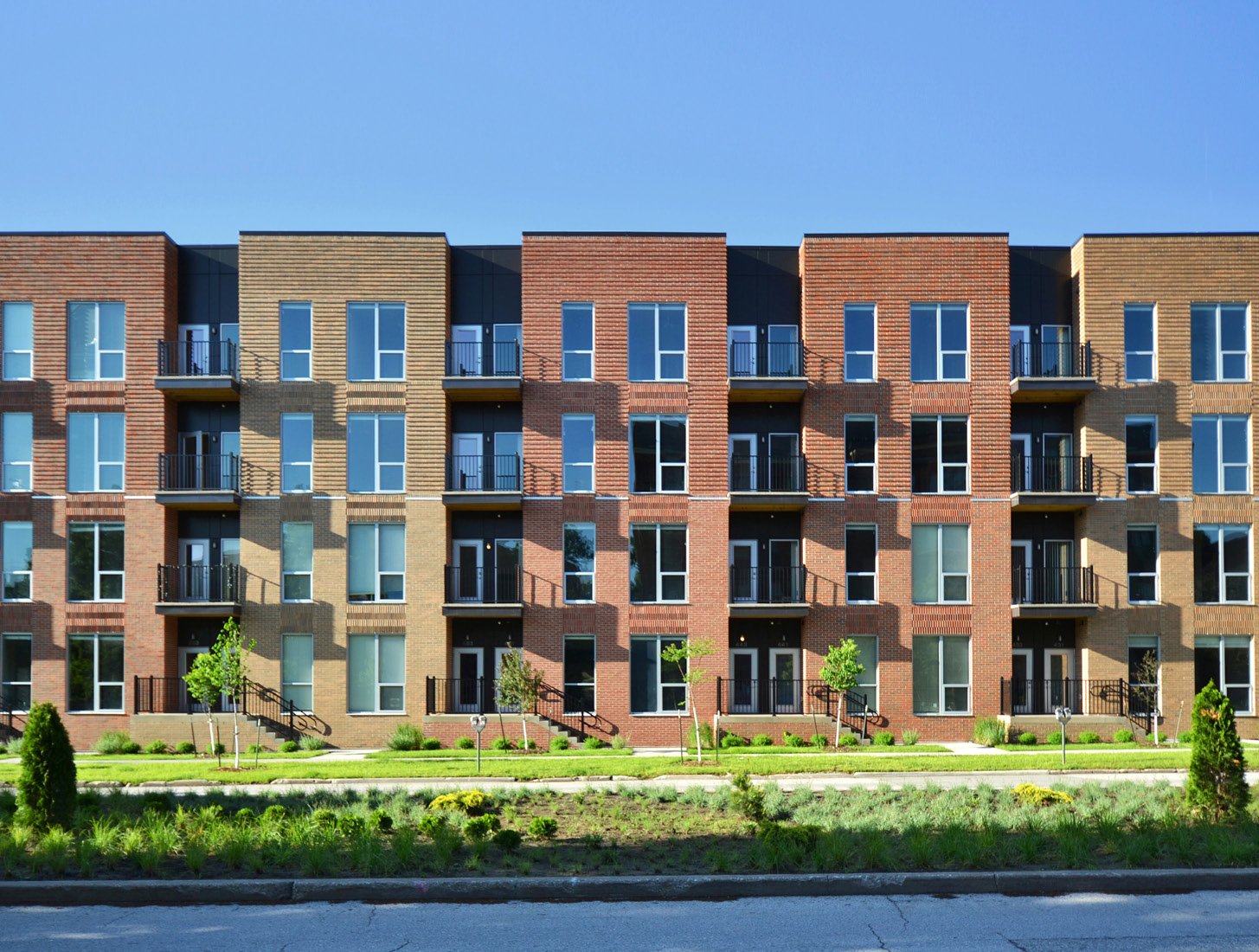
Multifamily and Mixed-Use Construction in Pueblo
Multifamily and mixed-use construction in Pueblo: downtown conversions, apartment communities and podium buildings priced with local numbers.
- Category
- Building Types
- Area
- Pueblo and southern Colorado
- Next Step
- Request a Project Review
Upstairs apartments over ground-floor shops are how downtowns like Pueblo's were built the first time, and a lot of that old fabric is sitting empty on the upper floors. Putting people back in those buildings is one kind of mixed-use work we do. The other kind is new: three or four stories of apartments on a fresh lot, with a retail or office base, a podium garage or a courtyard.
The numbers that frame the market are plain. The Union Avenue Historic Commercial District covers 27 acres of downtown with 69 contributing properties, many built in the 1880s. The city of Pueblo lists an average commercial price of $78.80 per square foot in the Downtown Opportunity Zone. Pueblo West, a community of 33,086 residents in 2020, grew from 29,637 in 2010. Where there are people moving in, someone has to build the housing, and where the city has an Opportunity Zone, an owner has a financing reason to look at downtown.
We build apartment communities, mixed-use buildings with commercial space below and homes above, senior and student housing and conversions of older buildings into residential. Our mixed-use construction and multifamily apartment construction pages explain how we run those jobs, and this page covers what matters in Pueblo.
Downtown conversion versus new construction on the edge
Downtown conversions use existing masonry shells and historic fabric, and they may qualify for incentives that new buildings do not, though those programs have their own rules that an owner's advisor should confirm. The cost is risk: hidden conditions, floors that are not level, and old openings that need new fire ratings. Our Union Avenue district page covers the typical building stock.
New apartment communities usually go to the edge of the metro where land is simpler to develop. Pueblo West is the obvious example, with US 50 bisecting it and a connection to I-25. CSU Pueblo added three residence halls in 2011 and its enrollment of 3,730 supports off-campus student housing demand, which makes the university area a possible site for developers.
What changes when homes sit above shops
Residential over commercial triggers the building code's rules on mixed occupancy: fire-rated horizontal separations, separate exits, sound control between uses, and mechanical systems that keep restaurant smoke away from bedrooms. The podium is the dividing line between the commercial base and the housing above, and getting its structure and ratings right is the key to a clean job.
Parking is another problem. Housing needs spaces, and downtown lots are small. A podium garage, a wrapped structure or a nearby deck can solve it, and we can bring in a parking structure expert for design coordination. In the older fabric, the 1921 flood, the largest in the city's history, sent water as deep as 18 feet through downtown, so we check ground floor elevations and the location of mechanical equipment.
Codes and approvals
Residential buildings of this type fall into the code's residential occupancy categories, with sprinklers and alarm systems required in most. Pueblo's building department lists the 2021 IBC, IEBC, IECC, IMC, IFGC and IFC as in effect, and existing historic buildings go through the existing building code, which gives some flexibility on alterations.
Colorado also requires any city or county that updates its building code after July 1, 2023 to adopt an energy code at least as strong as the 2021 IECC, and from July 1, 2026 the benchmark moves to the state model low energy and carbon code. For apartments, that influences envelope, windows, heat pumps and electric readiness. The city says commercial approvals currently take about 75 days, and we keep that period on the schedule.
How we organize a multifamily job
Repetition drives apartment construction, so we organize crews to move through the building in a rhythm: framing, rough-in, drywall, finishes, one floor or one building after another. Early framing and trade packages are priced with real quotes and not guessed. We hold weekly meetings with the owner and update the cost report as the design moves.
Developers who work with us, including those described under multifamily developers, know we share the real numbers and warn them early about risk. For buildings with a hotel component, see our hotel construction page, because lodging and apartments share many details.
Schedule for apartments and mixed-use
A three- or four-story wood-frame apartment building with a podium can go from permit to certificate of occupancy in roughly a year, depending on size and weather. Long-lead items such as elevators, windows, electrical gear and appliances need early orders. We prepare a procurement schedule at the same time as the construction schedule.
Phasing also matters for lenders, who release funds as milestones are met. We prepare payment applications that match the milestones and keep the paperwork clean. For historic conversions, we add time for hidden conditions and review by preservation staff if the building has designations that require it. We also keep a running list of every opening we cut in an old wall, since the next trade needs to know what is behind it.
What moves cost on residential and mixed-use
Framing system, number of stories, unit count, parking type and finish level move the budget most. Concrete podiums and structured parking cost more than surface lots. Downtown sites add logistics costs because staging is tight. Conversion jobs trade a lower structure cost for higher uncertainty.
The city's statement that commercial and industrial construction in Pueblo costs 10 to 15 percent less than the national average is a helpful reference for a pro forma, though residential costs depend on their own market. We give owners a range early and refine it as drawings develop.
Tell us the unit mix
Send us the unit mix, the site and the commercial program, and we will return a cost range and a schedule. If the site is downtown, we will include a first look at the existing building and the flood and code questions.
Questions Owners Ask
Is it cheaper to convert a downtown building or build new?
Conversions often have lower structural cost but higher uncertainty. New construction is more predictable and easier to finance. We compare both on the same site and show the difference in cost, time and risk so you can decide.
Does the Opportunity Zone help my project?
The city lists a Downtown Opportunity Zone with an average commercial price of $78.80 per square foot. Whether the tax treatment helps you depends on your financing and your advisor. From the construction side, we make sure the schedule and cost reporting satisfy whatever your capital partners require.
Can you build over a retail base?
Yes. A podium or a concrete transfer deck separates the retail from the apartments, and we coordinate fire ratings, sound and mechanical systems. We build model units and a mock-up wall section so the architect and owner can check details.
How much parking will I need?
Zoning sets a minimum. Downtown may allow reduced parking, while Pueblo West usually requires more. We coordinate the site plan with the city or county early, and we look at structured parking if surface lots do not fit.