
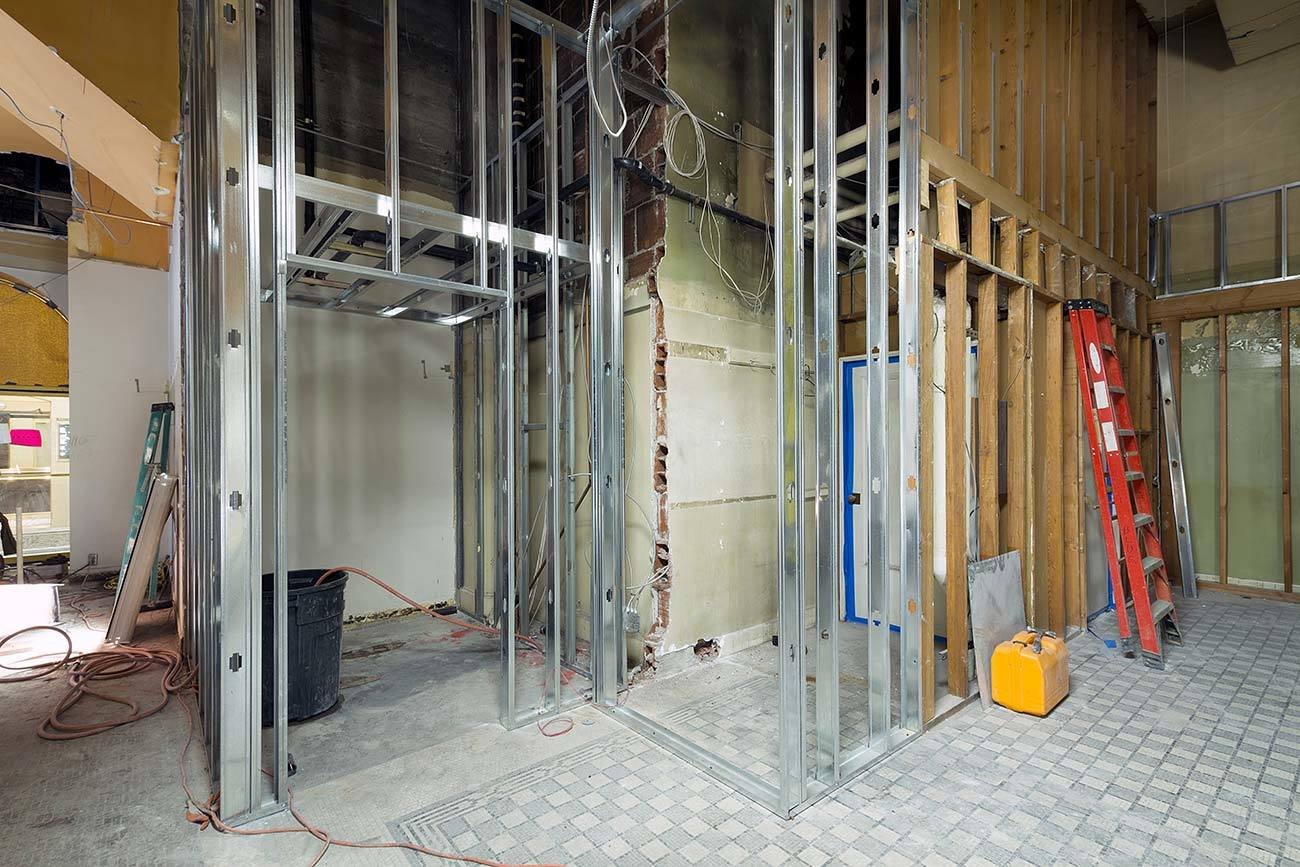
Tenant Improvements in Pueblo
Interior buildouts and renovations for Pueblo offices, clinics, stores and restaurants, built to the lease, the landlord rules and the opening date.
- Category
- General Contracting Services
- Area
- Pueblo and southern Colorado
- Next Step
- Request a Project Review
A trampoline park took over the former Sports Authority space at Pueblo Mall in 2019, the same year Sears closed. That is how tenant improvement works in a mall: one retailer leaves, a different business with a different use walks in, and the space has to change to fit it before the doors open. The shell is already built. What has to be rebuilt is everything inside.
Tenant improvements are interior buildouts and renovations for a specific occupant: offices, clinics, retail stores, restaurants, salons, gyms, classrooms and light industrial suites. They run from a few weeks of partitions and finishes to months of MEP work, new storefronts and structural changes. A good tenant improvement contractor is working for two parties at once, the tenant who has to open and the landlord who owns the building and wants it protected.
We work for both. We read the lease exhibits that define the landlord's work and the tenant's work, build to the landlord's rules for the building and tell the tenant what the buildout will actually cost before the lease is signed. If the numbers do not match the pro forma, we would rather say so during negotiation than during construction.
Space that turns over
Pueblo Mall covers 575,000 square feet on one floor, was opened in 1976 and has seen tenants come and go since. Jo-Ann Fabrics announced in February 2025 that it would close its mall location. Large boxes like that are the raw material for tenant improvement, since a closed retailer leaves behind a big shell that can be split or reused. The question for a landlord is what the space should become and what it will cost to get there.
Downtown has a different profile. The city of Pueblo lists an average commercial price of $78.80 per square foot in the Downtown Opportunity Zone, and many of the buildings there are historic. Tenant buildouts in the Union Avenue historic area deal with old structures, uneven floors and systems that have been patched for years. Newer strip centers and the Pueblo Mall corridor offer simpler shells but more competition for tenants.
Who builds out space
Landlords and commercial real estate developers hire us to prepare vacant space for leasing, with cold shell, warm shell and turnkey packages. Property management firms use us for repeated suite turnover and for tenant requests that come through during a lease. Tenants hire us directly when they need a contractor who will manage the landlord's requirements.
Medical groups, financial offices, restaurants and fitness operators are the common tenants, each with their own technical needs. A dental office needs plumbing, vacuum and compressed air. A restaurant needs a grease interceptor, a hood and makeup air. A fitness studio needs sound isolation and high ceilings. Knowing those requirements before the plans are drawn helps the tenant choose a space that will not blow the budget on the first site visit.
What a buildout includes
A typical buildout includes demolition of existing finishes, new framing and drywall, doors and hardware, ceilings, flooring, paint, millwork, plumbing fixtures, lighting, power and data, HVAC modification and fire sprinkler adjustments. Fire alarm devices and life safety signage follow the layout. Storefront and signage work often fall to the tenant, so we coordinate them with the landlord.
For the heavier jobs, we open slabs for plumbing, add structural support for equipment or openings, and extend mechanical systems. Existing conditions drive these costs, so we survey before we price: ceiling height, structure, utilities available, sprinkler coverage and any hazardous materials left from earlier tenants. If the space needs some selective demolition, we manage it directly and keep dust and noise away from neighbors.
Moving fast without cutting corners
Tenant improvements run on short schedules because rent starts or a lease expires. We plan the work backward from opening, with permit, procurement and construction overlapping wherever the rules allow. Long-lead items such as storefront glass, specialty equipment and custom millwork are ordered as soon as the design allows.
We also manage the landlord interface: delivery times, loading dock reservations, elevator use, after-hours work and utility shutdown windows. In a mall, work may be restricted to nights. In an office building, it may be limited by neighbors' hours. We write those constraints into the schedule from the start. The tenant who knows the date will be met builds their opening plans around it, and the one who gets surprises changes everything late.
Permits for interior work
Interior alterations usually need a building permit, and the city of Pueblo says commercial approvals currently take about 75 days. The Pueblo Regional Building Department lists the 2021 IBC, IEBC, IECC, IMC, IFGC and IFC as codes currently in effect. The IEBC, which governs alterations to existing buildings, is the one that matters most for a buildout. It decides what upgrades a change of use or a certain amount of work will trigger.
A change of use, such as converting retail to a restaurant or office to a clinic, can bring occupancy classification, egress, plumbing fixture counts and accessibility upgrades into play. We check this before the lease is signed. Our permitting process keeps submittals complete and tracks comments. We also handle landlord approvals, which often take as long as the city.
What a buildout really costs
Costs run from light cosmetic work to heavy gut renovation, and the range is wide. Scope, finishes, MEP complexity and the condition of the existing space drive the number. Landlord allowances help, but they often cover less than a tenant expects. We tell the tenant what the allowance will buy and what it will not.
Hidden conditions are the main cost risk. Old ceilings may hide ductwork that has to be rerouted, and floors may have layers that need to be removed. We include an allowance for unknowns and report on it as conditions are exposed. Value engineering is useful when there is room to move, such as swapping a finish or simplifying a detail. Cutting life safety, accessibility or code items is not an option, and we will not price it that way.
Price the space before the lease
Send the floor plan and the lease exhibits and we will give you a buildout number with the existing conditions and landlord items listed.
Questions Owners Ask
Who pays for the buildout, the landlord or the tenant?
It depends on the lease. Many leases give the tenant an allowance per square foot and leave the rest to the tenant. Some landlords build a warm shell with certain items done. We read the lease exhibits and tell you which work is whose, so there are no surprises.
How long does a tenant improvement take?
A small office can be done in a few weeks once permits are in hand. Restaurants and medical suites take longer because of MEP work and inspections. Permit review in Pueblo is about 75 days for commercial work, so start that as early as the plans allow.
Do you build in occupied malls or office buildings?
Yes. We follow landlord rules on hours, deliveries and protection, and we keep common areas clean and open. Noisy work is scheduled around tenants, and we coordinate shutdowns in advance.
What is a cold shell, a warm shell and a turnkey buildout?
A cold shell has the structure and basic utilities brought to the space. A warm shell adds a ceiling, mechanical, restrooms and lighting. A turnkey buildout is a finished space ready for the tenant to occupy. Each has a different cost and timeline, and we price all three.
Can you help us decide between two spaces?
Yes. Send us both layouts and we will give you a rough buildout number for each, along with notes on code, systems and existing conditions that could change the price. It is a small cost compared with a bad lease decision.