
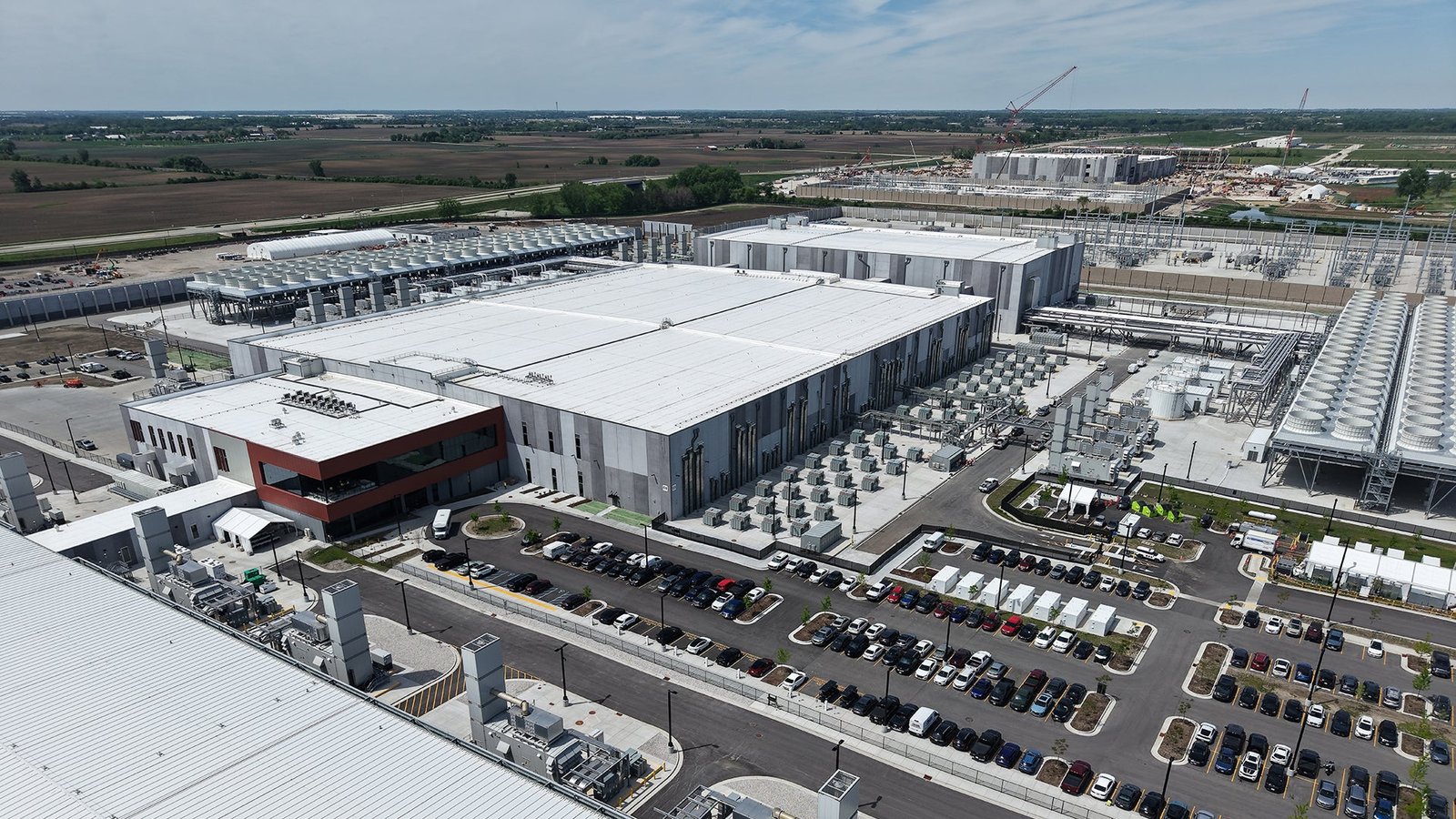
Data Center Construction in the Pueblo Area
Data center shells, power yards and site work in the Pueblo area. We build to your engineers and operator, price power honestly and do not oversell.
- Category
- General Contracting Services
- Area
- Pueblo and southern Colorado
- Next Step
- Request a Project Review
Power decides where a data center goes, and everything else follows from it. Before you look at a building, you need to know how many megawatts the site can get, how fast, and from whom. Pueblo has one data point worth knowing. The solar-powered rail mill on the south side was announced with a 240 megawatt on-site solar field, so large power supply is already part of the local industrial conversation. That does not mean a megawatt is waiting for you, and we will not pretend it does.
We want to be straight about what a general contractor adds to a data center. The electrical and mechanical designs belong to your engineers and your operator, and the specialty gear comes from the manufacturers they pick. What we bring is the site, the shell, the slab, the structure that has to carry heavy equipment, and the coordination between all of those trades. We are not the right choice if you are looking for a firm to design your cooling plant.
For owners weighing a site, our preconstruction estimating work is where we put real numbers against the early idea, before land is bought or an interconnection request is filed.
What to settle before the first drawing
Start with power, then water and cooling, then the building. Utility interconnection timelines for large loads can run longer than the construction itself, and they decide the opening date. We ask owners to bring the utility's load study or a written timeline, because without one any schedule we write is a guess.
Redundancy level is the next big fork. A facility built for continuous operation needs duplicate power paths, generators and fuel storage, and a structure that can house them with room to service everything. Tier decisions double or triple the electrical budget, so we price a base case and a high-resilience case side by side and let you see the difference.
Why the Pueblo metro is worth a look
The metro has large parcels with rail and highway access. Interstate 25 and US 85 share a route through the city, US 50 crosses it east to west, and both BNSF and Union Pacific serve freight. Heavy electrical gear arrives on trucks and sometimes on rail, so those routes matter more than the brochure suggests. Developers in commercial real estate who want to hold a powered site for a future tenant should also know that a land deal with no utility letter is a bet, not an asset.
There is also a deep bench of people who understand large industrial construction, from concrete to welding to electrical work around big mills. That helps a data center job. It does not replace the specialty skills a hall full of switchgear and chillers needs, and we bring in qualified firms where the work calls for them.
Where the money goes
The building shell is often the smallest part of the budget. Electrical gear, cooling equipment and the commissioning of both account for most of the cost, and these items carry long lead times and price swings. We track manufacturers' lead times and tell owners which orders cannot wait for a final permit.
Site costs deserve attention too. The city says commercial and industrial construction here costs about 10 to 15 percent less than the national average, but a data center site still needs substation space, fuel storage, detention and secure fencing. We carry those as separate lines so you can see what the land and what the building contribute.
Codes and the energy question
Colorado sets energy requirements at the state level through HB22-1362, which requires any city or county that updates its building code on or after July 1, 2023 to adopt an energy code at least as strong as the 2021 IECC, and from July 1, 2026 points to the state model low energy and carbon code. For a building that runs continuously, energy code compliance is a real design topic, not paperwork.
In Pueblo and Pueblo County, the Pueblo Regional Building Department lists the 2021 I-codes and the 2023 NEC as in effect. We confirm the current editions and any local amendments at the start of design, because owners who guess wrong redraw sheets.
Services that sit next to a data center build
Most data center sites begin as raw land, so site development and utilities is part of the same job. We handle grading, drainage, duct banks and access roads, and we coordinate with the utilities on trench routes and easements. On a large parcel the access road alone can take weeks, and the stormwater plan has to be approved before the first footing is dug, so we sequence civil work early and keep it moving while the building design finishes.
Some owners also want a light-industrial building next door for storage, staging and technicians. Our flex and light industrial construction experience helps there, and owners comparing delivery methods can read about design-build delivery as well.
Start with the site and the power
Send us the parcel, the load you expect and the utility timeline you have. We will tell you what the site and shell will cost and where the schedule risks are. You can also see how we describe the data center building type in more detail.
Questions Owners Ask
Do you build the electrical and cooling systems?
We manage and coordinate them. The design comes from your engineers, and the major equipment comes from specialty vendors and licensed electrical and mechanical contractors. We build the structure, the slab, the site and the support spaces, and we run the schedule that ties it together.
How big a facility can the Pueblo area support?
It depends on the utility and the parcel, not on us. Large sites such as PuebloPlex and other industrial parcels have the land, but power capacity must be confirmed with the serving utility. We would not give you a megawatt number without that written answer. If you are still choosing between sites, we are glad to compare them for Pueblo and the surrounding county on access, ground and cost.
How long does a data center take to build?
The shell can be up in months, but commissioning and long-lead equipment stretch the total. Switchgear, transformers and generators can take far longer to arrive than the building takes to rise. We build the schedule around deliveries and tell you which orders to place first.
Can you work with a hyperscale or enterprise operator's standard design?
Yes. If an operator brings a standard design package, we price and build to it and adapt it to local codes and soil conditions. We will flag anything in the standard that does not fit Pueblo's code requirements or site conditions early, before it becomes a change order.
What does a first-phase budget look like?
We can give an early range based on building size, redundancy level and site work, then tighten it as the design matures. We separate site, shell, electrical and mechanical lines so the large equipment purchases do not hide inside a single lump sum. Owners can then see which numbers are firm, which are allowances and which depend on a utility or vendor answer that has not arrived yet.