
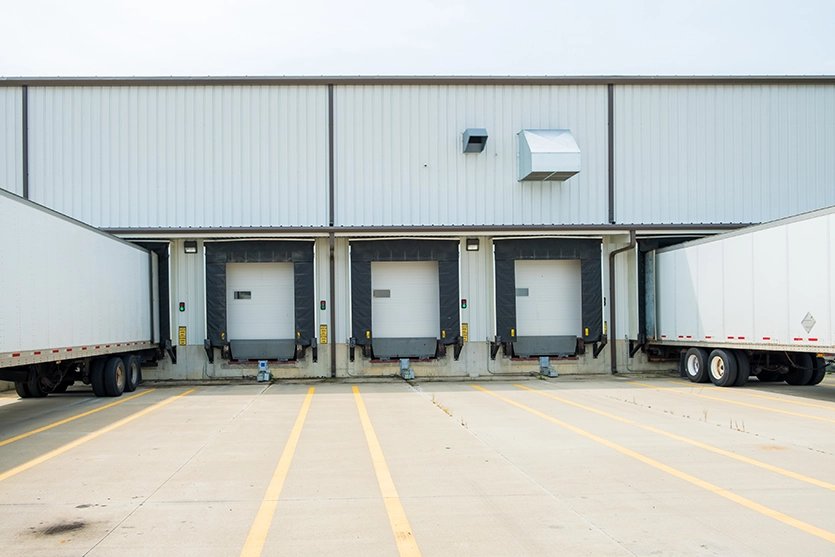
Truck Terminals and Cross-Dock Buildings in Pueblo
Truck terminal and cross-dock construction in Pueblo along I-25, US 50 and SH 47, with heavy concrete yards, dock layouts and winter-ready drainage.
- Category
- Building Types
- Area
- Pueblo and southern Colorado
- Next Step
- Request a Project Review
Pueblo sits where the Front Range interstate, a cross-state highway and two railroads meet, and that is the first thing a freight operator looks at when choosing a terminal. Interstate 25 and US 85 run together through the city, US 50 crosses it east to west, and BNSF and Union Pacific both serve it. Walsenburg is 48 miles south on I-25 and Trinidad is 36 miles beyond that, at the foot of the pass that carries the interstate and the BNSF mainline south out of the state.
A truck terminal is a building that exists to be run around. Trailers come in, freight crosses a dock and trailers leave, hour after hour. The structure is long and narrow, with doors on one or both long sides, and the real work is in the pavement, the lighting, the drainage and the yard. If the concrete fails, the terminal fails.
We build less-than-truckload terminals, cross-dock facilities, driver and maintenance buildings and the truck yards around them. We spend most of our planning time on how the lot works at 2 a.m. in January.
Where terminals want to be
Terminal operators pick sites by exit, not by address. Pueblo gives them several. I-25 exit 94 serves State Highway 45, Pueblo Boulevard, on the south side, and exit 96 serves Minnequa Avenue. On the north side exit 101 starts State Highway 47, which runs east as a six-lane divided road past Troy Avenue and Jerry Murphy Road to the US 50 interchange. Exit 104 serves Dillon Drive and Drew Dix Parkway.
Beyond the city, US 50 east gives access to Pueblo West, Avondale and La Junta, and the southern I-25 towns have lots along the highway. Each location trades land cost against distance to freight. Our pages on the Pueblo Boulevard corridor and the State Highway 47 corridor describe the main choices.
What the freight map looks like
Pueblo is a pass-through point and a destination. The steel mill makes rail, rod and bar, and the city's industrial parks hold distribution and light manufacturing users. PuebloPlex lists logistics and rail-related industry among its target uses. The Transportation Technology Center northeast of the city has about 48 miles of railroad track, a sign of how deep the rail economy runs here.
That freight base supports demand from regional carriers, parcel and pallet networks and local distribution. A terminal built here can serve the metro and feed routes up and down I-25 and east on US 50. See also our work for logistics and distribution companies.
What we build in a terminal
The building is a long, narrow shell, often tilt-wall or pre-engineered steel, with a high number of dock doors on one or both long sides. Interior elements include dock levelers, canopies, sorting floors, offices, driver areas, a maintenance bay and a fueling or wash area if the operator wants one. Dock height and door count follow the operator's trailer mix. Most terminals use dock-high doors for standard trailers, and some add a few grade-level doors for box trucks and pickup and delivery vans. Door spacing needs to leave room for forklifts to turn between trailers, and a canopy over the doors keeps rain and snow out of the trailer.
The yard may cost as much as the building. It includes heavy-duty paving for trailer parking and drive lanes, drainage and detention, lighting, fencing, gate controls and sometimes scales. Our truck court and dock apron work is built around the loads a terminal sees every day.
Pavement, drainage and winter
A trailer parked with its landing gear down puts a concentrated load on pavement that thin asphalt cannot carry. Concrete dock aprons and heavy sections at landing gear areas stand up better, and joints need to be tight and well sealed. Subgrade preparation matters as much as thickness. We test soils, proof roll subgrades and specify sections for the traffic the operator expects.
Winter is the other design driver. Ice at the dock door is a safety hazard, so the slope and drainage need care. Snow storage areas, lighting and heated sections at key doors help. Pueblo is at 4,692 feet and Trinidad near 6,000 feet, with Raton Pass at 7,834 feet south of town, so winter weather affects freight operations in this corridor. We design yards that drain and clear quickly. That means grading every lane to a defined low point, placing inlets where water leaves the apron rather than where it collects, and keeping detention basins and snow piles away from the dock approach. A yard that is flat on the plan but ponds in the first thaw costs the operator in slips, damaged trailers and lost time.
Pedestrians, forklifts and trailers
A terminal mixes tractors, trailers, forklifts and people on foot. The layout should separate them wherever possible: marked walkways, a clear driver entry, protected stairs and bollards at critical corners. We apply these rules to the finished design and also to our own work during construction, since terminal expansions often happen next to an active yard.
Code review covers occupancy, fire separation, sprinklers and any fuel or hazardous material storage. The Pueblo Regional Building Department lists the 2021 IBC and IFC as in effect, and the city says commercial approvals currently take about 75 days. We help operators prepare for review and the inspections that follow. Fire access around the building, hydrant spacing and sprinkler coverage over the dock canopy are the items reviewers raise most often on long buildings, so we address them in the first submittal. For related buildings, read about distribution centers and fulfillment facilities.
Walk your terminal site with us
Send us the dock count, trailer mix and the exit you want to serve. We will tell you what the building and yard cost to build in this corridor and what your lot can handle.
Questions Owners Ask
How many dock doors should a terminal have?
The count depends on freight volume, trailers per day and how long each door is occupied. Cross-dock terminals often run more doors than the freight volume alone suggests, because they need doors for both inbound and outbound trailers. We lay out several door counts and show what each one does to the building length and yard size.
Should the yard be concrete or asphalt?
Concrete costs more upfront but lasts longer under heavy trailer loads, especially at dock aprons and parking areas where landing gear sits. Asphalt can work for drive lanes and lighter areas. A mixed design often gives the best value. We price both sections and show life-cycle differences so you can decide.
Can we build a terminal near the airport or on SH 47?
Often yes, subject to zoning, utility service and airport height and lighting review near the field. State Highway 47 gives direct access to the US 50 interchange that serves Pueblo Memorial Airport. We check zoning and access permits before you buy land.
What utilities does a terminal need?
Power for lighting and dock equipment, water and sewer for restrooms and any wash bay, and fire protection water for the building. Yard lighting is a large electrical load, and fuel areas need their own spill and containment design. We confirm service capacity early, since extending a line to an edge-of-town lot can take months.
How long does a terminal take to build?
A small terminal can be done in several months once permits are in hand, while a larger one with a big yard takes longer. The yard paving and detention are often the longest items, and they depend on weather. We set milestones for dock readiness, yard completion and occupancy.