
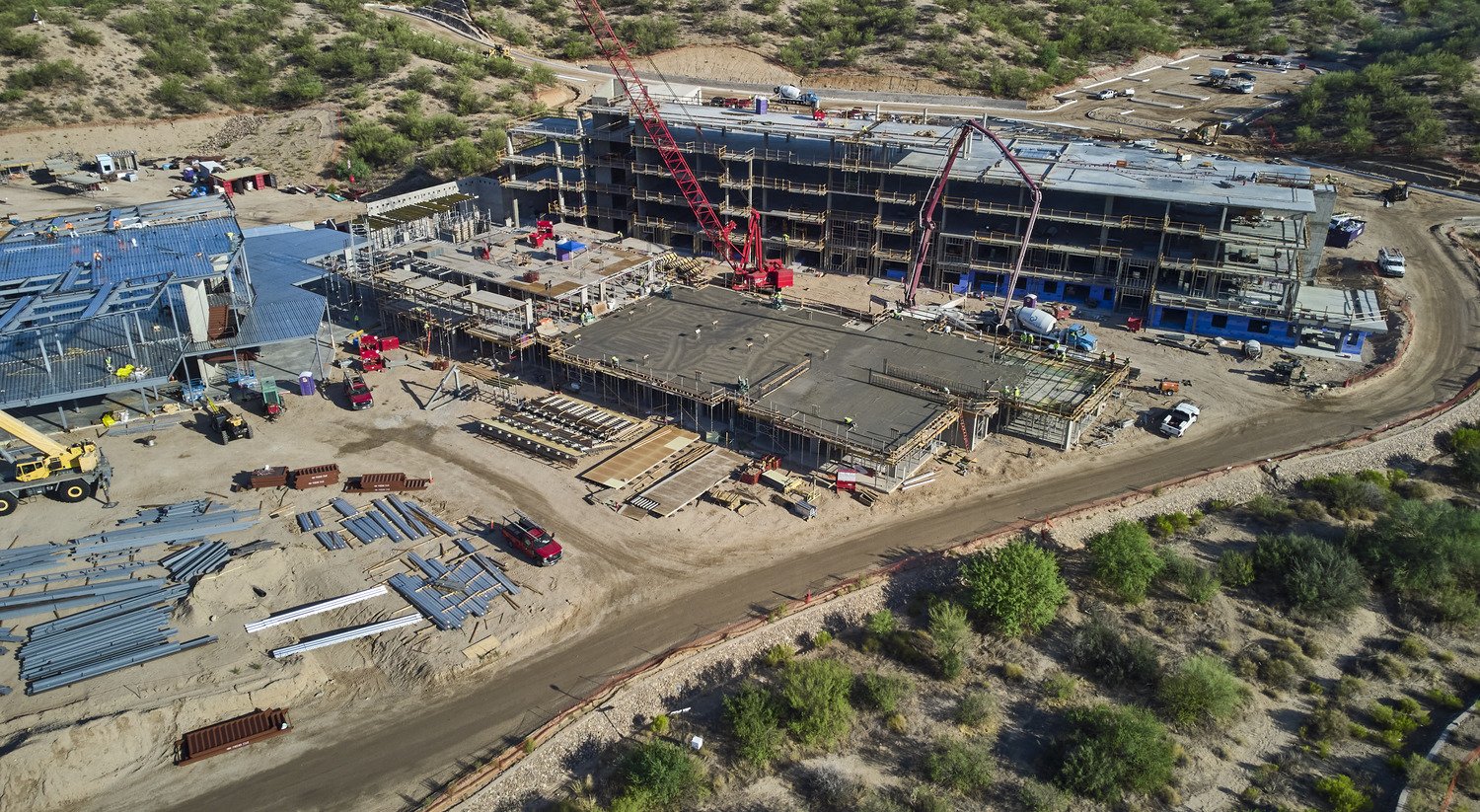
Senior Living Construction in Pueblo
Senior living construction in Pueblo and the valley: independent, assisted and memory care buildings built to licensing, life safety and operator budgets.
- Category
- General Contracting Services
- Area
- Pueblo and southern Colorado
- Next Step
- Request a Project Review
Residents of a senior living building spend more hours inside it than almost anyone else spends in any building we construct. Corridor width, handrail height, door weight, lighting levels and how far it is from a bed to a bathroom are not finish details. They decide whether the building works for a seventy-year-old with a walker. We start from that fact on every senior living job.
Senior living is a family of building types, not one. Independent living is apartments with shared dining and activity space. Assisted living adds help with daily tasks, call systems and a licensed operator. Memory care adds secured wings and gardens. Skilled nursing is the closest to a hospital in code and systems. Each carries its own life-safety rules, staffing needs and licensing path.
We build the shell, interiors and systems for those buildings and for additions to existing campuses. Owners range from regional operators to local nonprofits. Pueblo and the valley have a need for senior housing close to existing care, and the first step is always a program that matches the license you plan to hold.
What Goes Into the Building
A typical assisted living or memory care building is one to three stories, wood or light-gauge steel framed, with a commercial kitchen, dining room, activity rooms, salon, therapy space and a nurses' station. Resident rooms have private bathrooms with roll-in showers, grab-bar blocking in the walls and nurse-call devices. Corridors are wider than apartment corridors, and floors are slip-resistant.
The building envelope matters. Residents are sensitive to drafts and to temperature swings, so insulation, windows and mechanical zoning are higher priorities than in a general office. Backup power is another item: at minimum for life safety, and often for refrigeration, elevators and medical equipment. We price these at the outset. For the larger care campus and its clinical systems, see our approach to healthcare construction, which shares many of the same systems.
Occupancy, Licensing and Plan Review
The code classification depends on the care provided. Independent living is usually apartment occupancy, while assisted living and memory care fall into residential care classifications with sprinklers, fire alarms and smoke compartments. Skilled nursing follows institutional rules with defend-in-place fire protection. The Pueblo Regional Building Department lists the 2021 IBC and IFC as in effect, and the operator's state health department license adds another review of the plans.
Review runs on two tracks: the building department for the permit, and the state agency for the license. The city says commercial approvals currently take about 75 days. State review adds time, and the license often cannot be issued until the building passes final inspection. We put both clocks in the same schedule. The operator should know that the date of final inspection is also the first date they can apply to open.
Safety for Residents and Crews
The hardest safety problem is building next to residents. When an addition goes up beside an occupied wing, construction noise, dust, deliveries and workers moving around are disruptive to elderly people. We separate the work with sealed barriers, run dust control, keep construction traffic away from entrances and schedule noisy tasks away from mealtimes and rest periods. Workers wear badges and stay out of resident areas.
Inside the finished building, life safety must be proven before residents move in. Fire alarm, sprinkler, smoke control, emergency lighting, generator transfer and nurse call systems are tested and documented. Our commissioning and closeout process tests these in the order inspectors want, and trains the operator's maintenance staff before opening.
Why This Work Is Growing Here
Pueblo West grew from 29,637 residents in 2010 to 33,086 in 2020, and its 49 square miles have room for campuses with gardens and walking paths. The Pueblo West area, which also has a hospital in the Parkview system now part of UCHealth, is a natural place for a senior community close to care. Open land keeps the site cost down, which matters when the building itself is expensive.
In the Canon City area, the economy is tied to the prison system and to St. Thomas More Hospital, which is listed as a major employer. Hospital and corrections employment gives the area a base of year-round jobs. The Canon City area has its own needs, with the Arkansas River and the Royal Gorge giving a strong sense of place. The owner has to decide whether residents will mostly come from the surrounding community or relocate from elsewhere, because that decides how much to spend on amenities.
Where the Budget Goes
Senior living costs more per foot than market-rate apartments because of the care infrastructure. Commercial kitchens, nurse call, secured entries, backup power and more plumbing per room all add up. Memory care costs more per bed again because of the secured design. We build estimates by care level, not by building, so that an operator can compare options.
Operators should weigh construction cost against operating cost. A more compact building with shorter walking distances can cut staff time. Durable finishes cut maintenance. Better acoustics and lighting reduce complaints. We offer value engineering ideas that cut cost without hurting care, and we say when a cut will cost more later. For the housing side, see multifamily apartment construction for the basic building economics, and property management firms for how we plan turnover-friendly finishes.
Start With the License You Plan to Hold
Tell us the care level, bed count and site. We will price the building, map the permit and license steps and outline a schedule that gets residents in on the date your operator needs.
Questions Owners Ask
What is the difference between independent living and assisted living in construction?
Independent living is built like apartments with shared amenities. Assisted living adds care infrastructure: nurse call, wider corridors, accessible bathrooms, commercial kitchen and sprinklers, and often fire alarm and smoke compartment rules. The operator's license drives the design.
Do I need a state license before I build?
The operator typically applies for a license in parallel with construction, and the plans are reviewed by the state agency. The license often cannot be issued until the building passes final inspection. We line up both timelines so you do not have a finished building waiting on paper.
Can you add to an existing senior campus while residents live there?
Yes. We use sealed barriers, dust control, separate construction access and schedules that avoid meals and rest times. Residents' families and staff get regular notice of any noisy or disruptive work.
What features do owners most often forget?
Backup power, nurse call coverage, laundry capacity, storage for mobility equipment and exterior walking paths. We add them to the preconstruction checklist so they are priced rather than discovered.
How long does a new assisted living building take?
Twelve to eighteen months from permit to occupancy is common for a one to three story building of moderate size. The city quotes about 75 days for commercial permit review, and licensing review follows on its own timeline.